

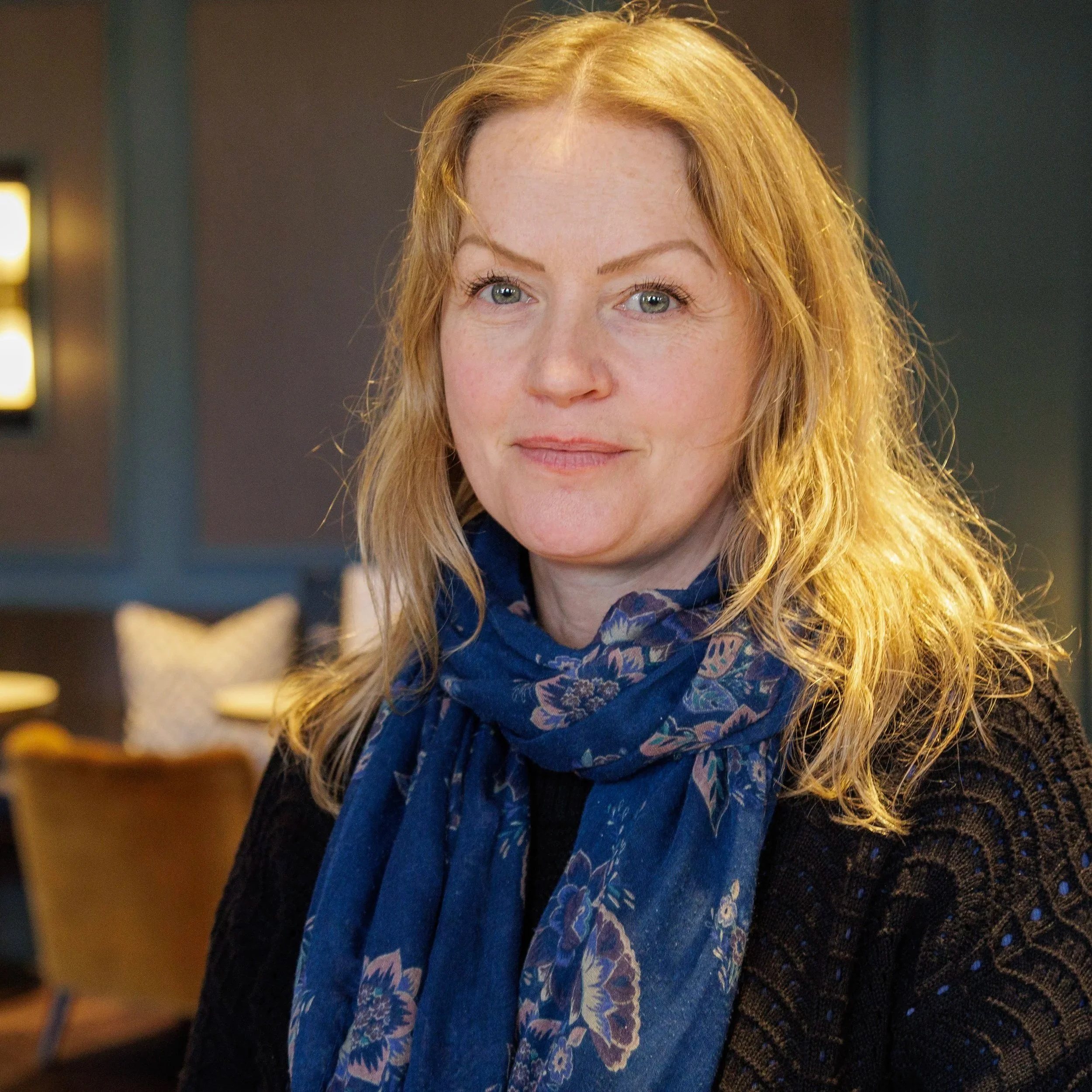
Stephanie, Baxter’s Place - ‘to the wall’
“I've always had a deep sense of faith. I travelled a lot as a professional model, and one night I missed a flight from Seoul to Tokyo. Seoul airport closed at midnight then, it was already late and I had nowhere to go. Three rough-looking guys at the entrance were watching me closely, waiting for me to be chucked out of the airport. We’d been told by the agency, don't get into any cars, there's mafia here, and if you go out, don't drink. Nobody knew where I was. I was frightened, and I thought, if they get hold of me, I'll be locked up somewhere, just another missing person. I'll never get out.
So, I was panicking, looking in the toilets, wondering if I could just sleep there overnight, how I could get a flight tomorrow without money. I was crying. Anyway, I started praying. Basically, I said I don't know what to pray for, because I can't see a solution, but help me!
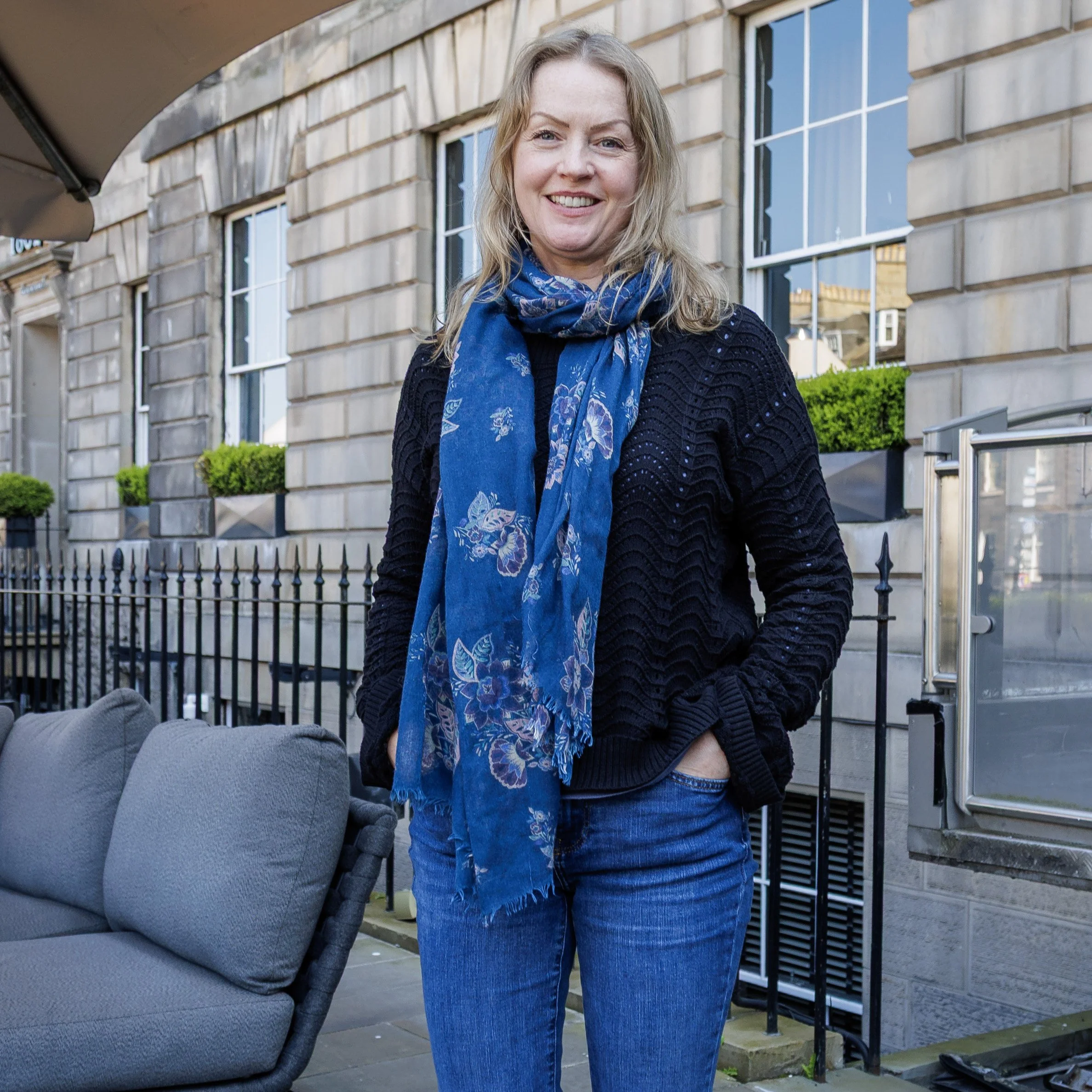
Then, amazingly, three people appeared and came up to me. I'm not really a Bible basher, but they were giving out bits of paper saying, Do you believe in Jesus? in English. Hardly anyone had English. Mostly even the signs weren’t in English in the early 90s. I told them what was happening, and they said, ‘You can sleep tonight in the church.’
So they took me to the pastor's house. She looked after me, said some prayers with me, made me some food and took lovely pictures of us. They were so poor, but really beautiful people. She had one main room, and she rolled out a bed for me. I don't know where she slept.
She eventually took me back to the airport, explained the situation and told them, ‘She's not buying another ticket,’ and I got to my next job in Tokyo!
We won’t know all the answers till we're out of here, but there is so much more than just what we see. If we ask for help, we'll get it. People are often ashamed to ask for help - it's like, I'm doing it my own way. Well, good luck, but I couldn't do it my own way that day. If I relied just on me, it was to the wall.”
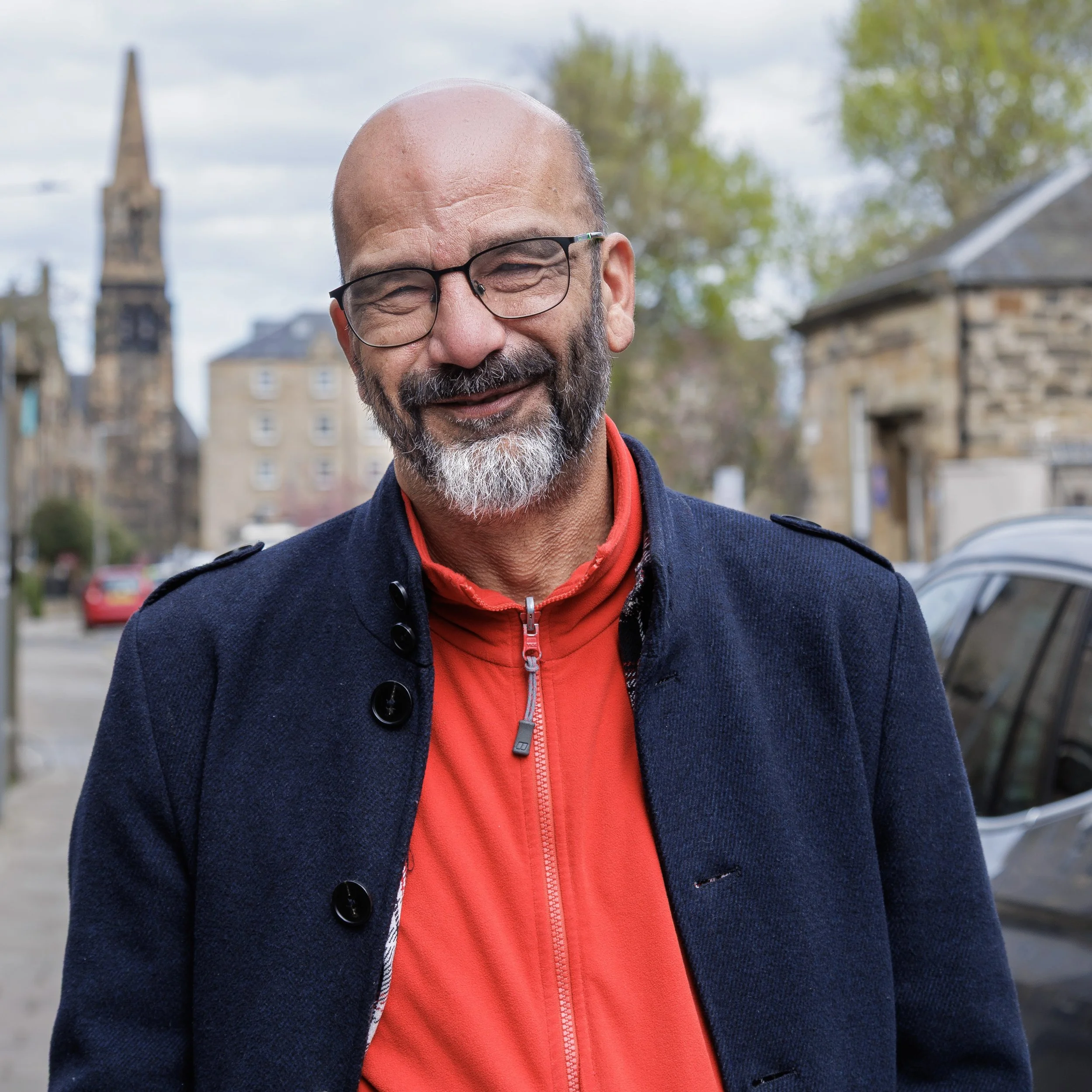
Ken, Academy Street – ‘this mutual thing’
“My mantra is, ‘Put yourself in the other person’s shoes.’ Don't treat other people in the way that you wouldn't want to be treated yourself.
I'm fortunate enough to have been able to pull myself out of the formal workplace about five or six years ago. To help survive financially, I do a wee B&B at my flat, one person at a time. I've been doing that for a number of years now and people love it. The secret is to imagine yourself in your guest's shoes, arriving in a different country, in a different city where you don't know anything. You have to learn to listen to them, to be sympathetic, empathetic, to help them. Then they usually buy you your dinner and a beer too! This mutual thing – it calms you down as a person. I’m much less judgemental than I ever was before.”
How would you advise your younger self?
“Looking back, I wish I’d exercised more patience, and paid more attention to people. I didn’t appreciate my mum properly. I missed out on her last 15 years, and she died very young. My dad died more recently but I contributed greatly to his care, which is another reason that I stopped work - so that I was available to go up to Dundee twice a week to be with him. I never got to know my dad as well as I did in his last four years of life. Despite bad health and dementia those final years was the best quality time that I had with my dad. I realised what an incredible man he was. So yes, pay attention to people around you, family members and friends, don't take them for granted.”
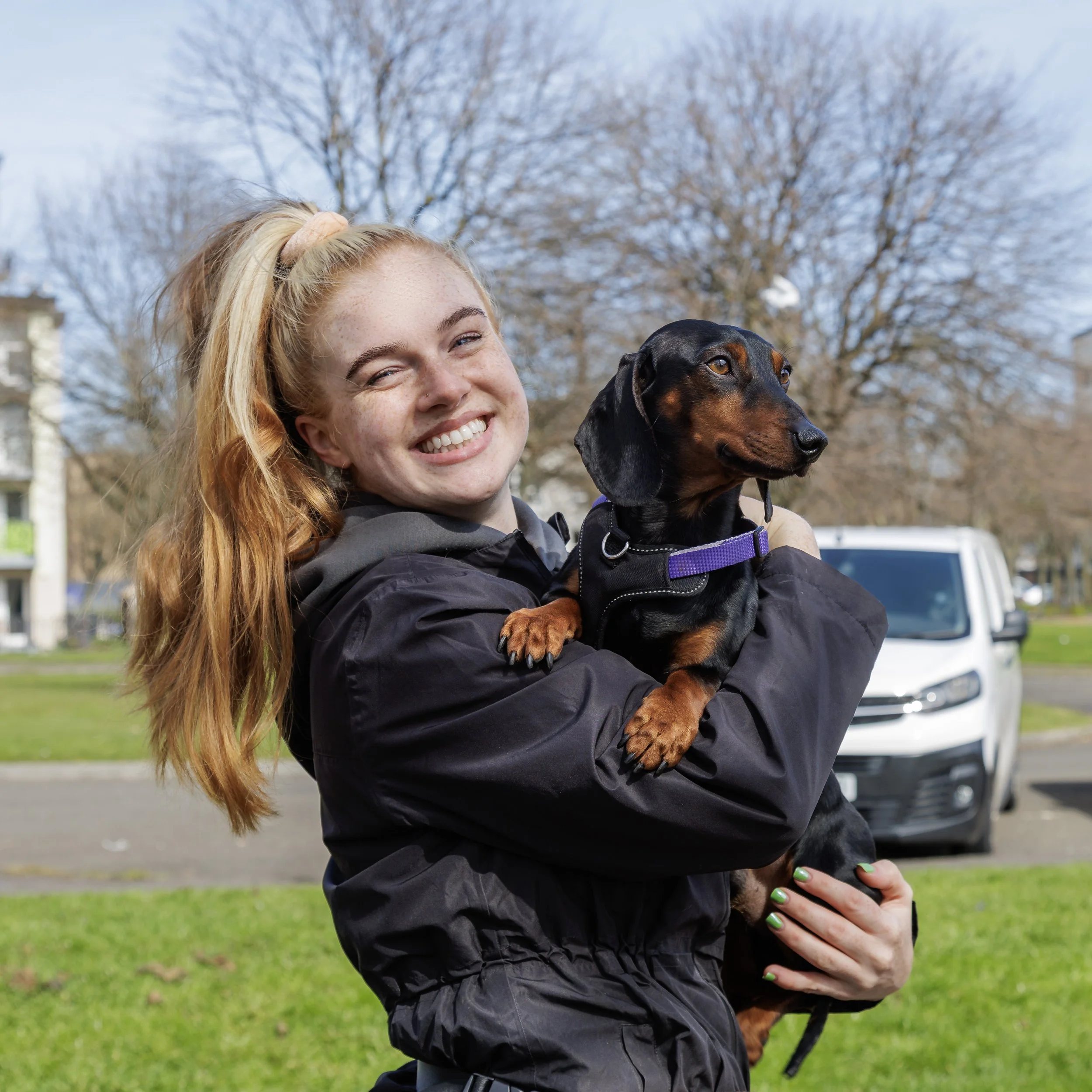
Leah and Bruno, Pennywell Gardens – ‘it’s like a superpower’
“Honestly, I enjoy helping people the most in life. I worked in foster care back home in Dublin as a placements officer, matching children and young people to carers who I knew would be fit for the job. I loved it. It involved a lot of empathy.
I met my boyfriend in Dublin, and we moved here three years ago. He’s from Peebles. I think if I lived anywhere else in the world, I'd feel homesick, but not in Scotland. The people here are so similar to home. They're welcoming and chatty with the same cheeky sense of humour, and a bit of edge, which is lovely.
For now, I'm a full-time dog carer, helping people with rescues and pets that are particularly frightened, include Bruno, this feisty little man here. I'm looking to get back into a third sector job, but for now my contribution is helping people with these scared little pups.”
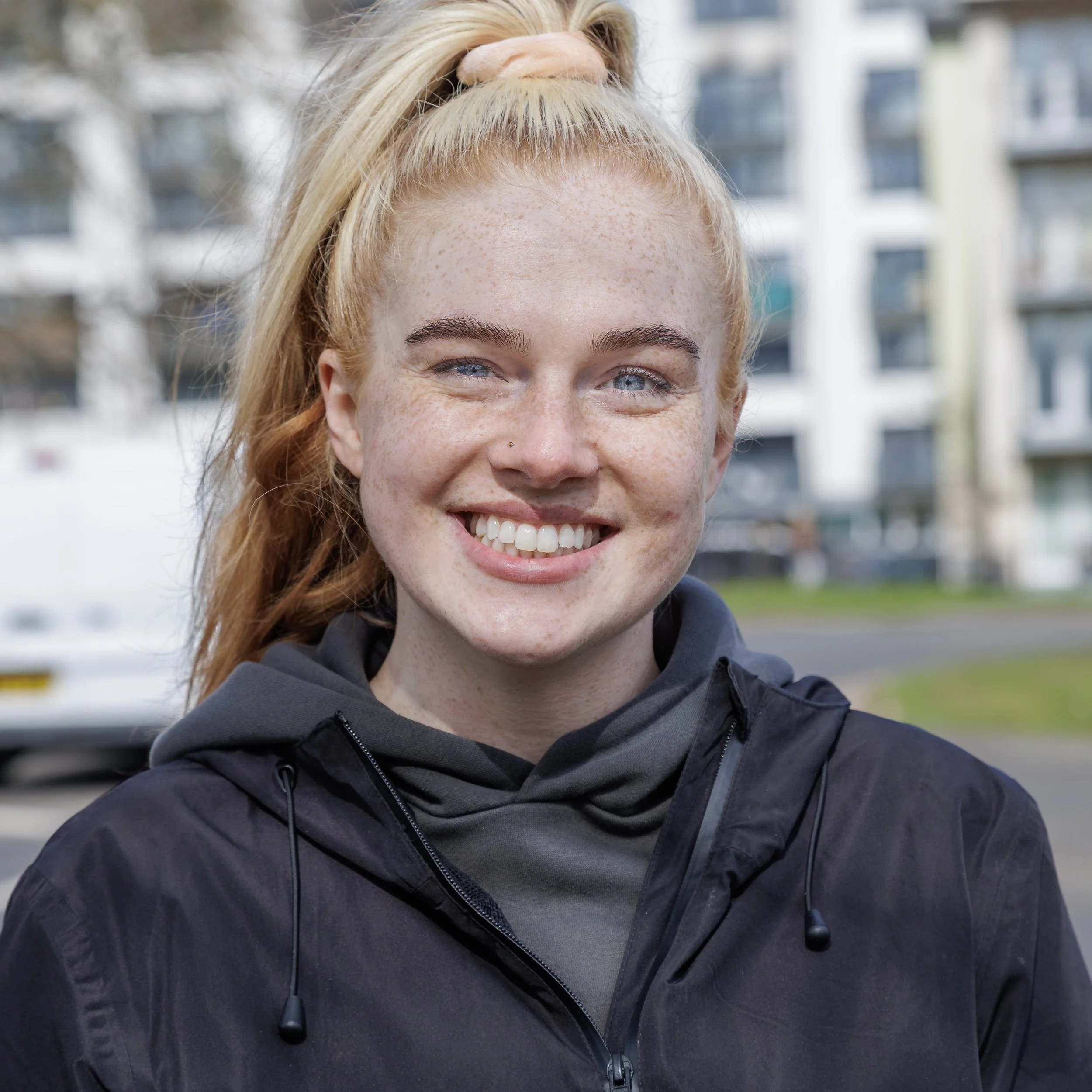
What’s been your best decision?
“I think moving here. When you step out of your own little corner of the world, your perspective broadens, your eyes are opened, you just meet the most amazing people. So, travelling would be the best thing to happen to me, definitely.”
What advice would you give your 15-year-old self?
“I'm diagnosed with ADHD, and when I was younger I was very, very lost. My advice would be don't worry so much about small things. Be kinder to yourself. You'll find your way and, you're going to find the most amazing tribe of people and friends and you'll be happy. It'll all work out.”
Was being diagnosed with ADHD helpful?
“Massively. It’s like a superpower. I have a strong memory, good recall, and the ability to see ideas others mightn't have spotted. I remember unique things about my clients, and they appreciate the personal touches I can then offer. The stereotype is, ‘they can't pay attention to anything,’ but, in fact, we can hyper-focus and if we're passionate about something it consumes us, which is lovely!”
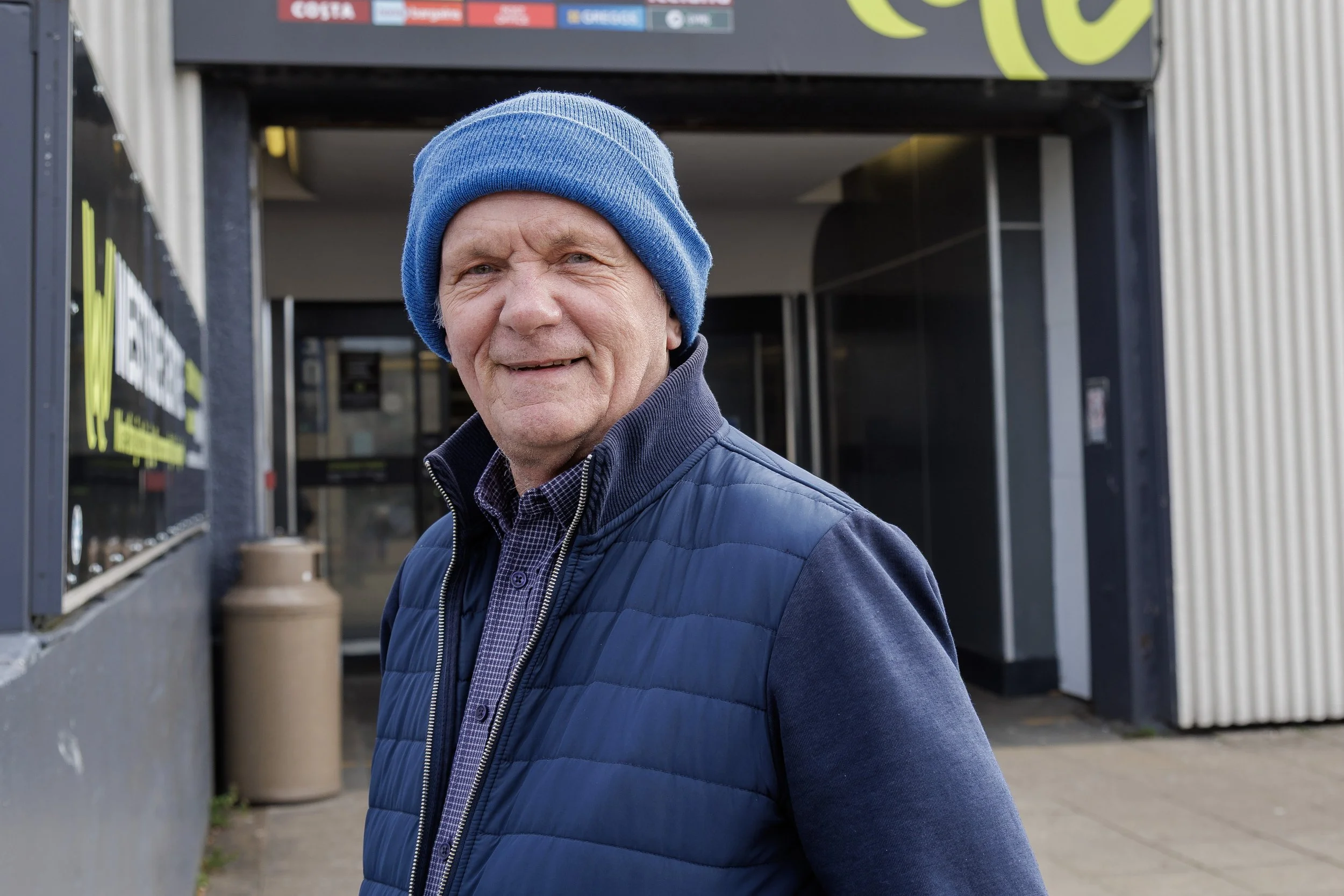
Dougie, Westside Plaza – ‘life’s not so bad!’
“On the downside, I’m going a bit deaf, I’ve had to let go of the car and myself and the wife would like to relocate, because let’s just say we’ve got problematic neighbours.
On the upside, I love my golf. I play every week. I’ve got my family and one of my laddies likes the golf too, so sometimes he comes and picks me up and we have a game together. The wife and I get along great. Life’s not so bad!”
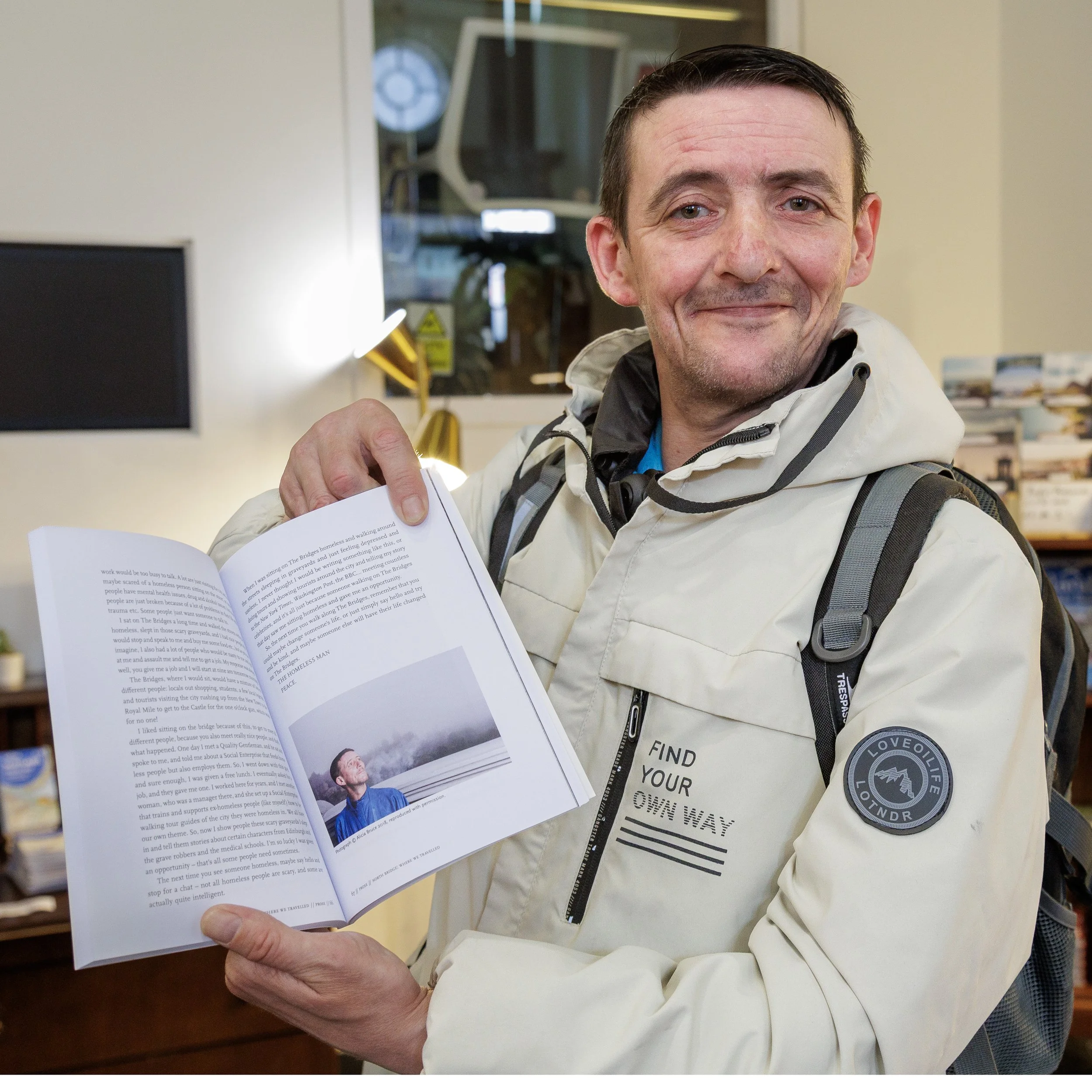
Sonny, Grassmarket – ‘Beggars Can Be Choosers’
“My dad’s boss was called James Harkins. He killed his wife, his son and his brother-in-law at Gartnavel Hospital in Glasgow. Then he came to hide at our house. My dad had heard a news flash and suspected him, so he slipped out, supposedly to buy booze. Glasgow off-licences had bouncers then. The bouncer was a friend of his called Frank. He came back with my dad. They re-entered the house but didn’t lock the door so the Police could get in. But Harkins realised that and pulled a huge scalpel on them. Frank hit him with a hammer. That ended it.
My mum suffering from post-traumatic stress after that. My dad left before I knew him. I was in a care home in Edinburgh from age 10 – 16. The staff battered us. They were pure bullies. When mum died, I moved to Bathgate with my sister. I made £800 every Friday and Saturday night selling drugs but just wasted it all. One night my sister stabbed me seven times. I nearly died, but I refused to charge her. She had her own problems.
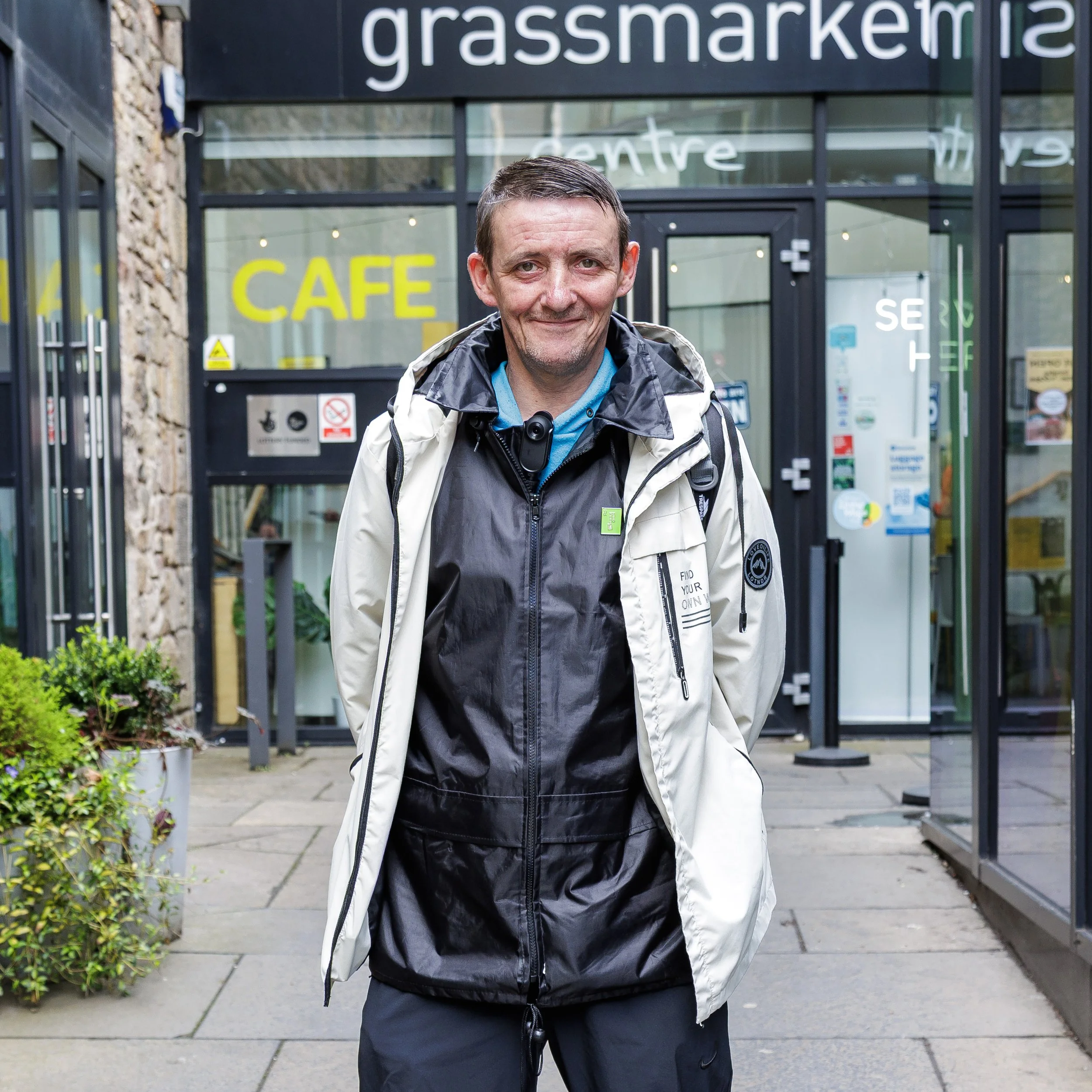
I came back to Edinburgh and was on the streets. I was a heroin addict for two years. I appeared in court before a Sheriff Ross and I was going to be put away. I asked him to give me a chance. He did. I had to see a social worker twice a week and see Sheriff Ross every month. The Streetwork charity helped me find accommodation. Then I heard about a social enterprise called Invisible Cities who train ex-homeless people as tour guides. I trained for that and really enjoyed it. I’ve been doing it for years now in Edinburgh. I do two tours, a Crime and Punishment tour and a Writers tour.
I fundraise for Social Bite and do public speaking. I’ve done a video for the BBC, I've been to prisons, the Rotary Club and I’m going to Stuart Melville College in September. I’ve spoken in front of George Clooney and Bob Geldof, I’m in a book called ‘North Bridge: Where We Travelled’ and another called ‘Paying it Forward’, and I’m writing my own book.”
What will you call your book?
“Beggars Can Be Choosers.”
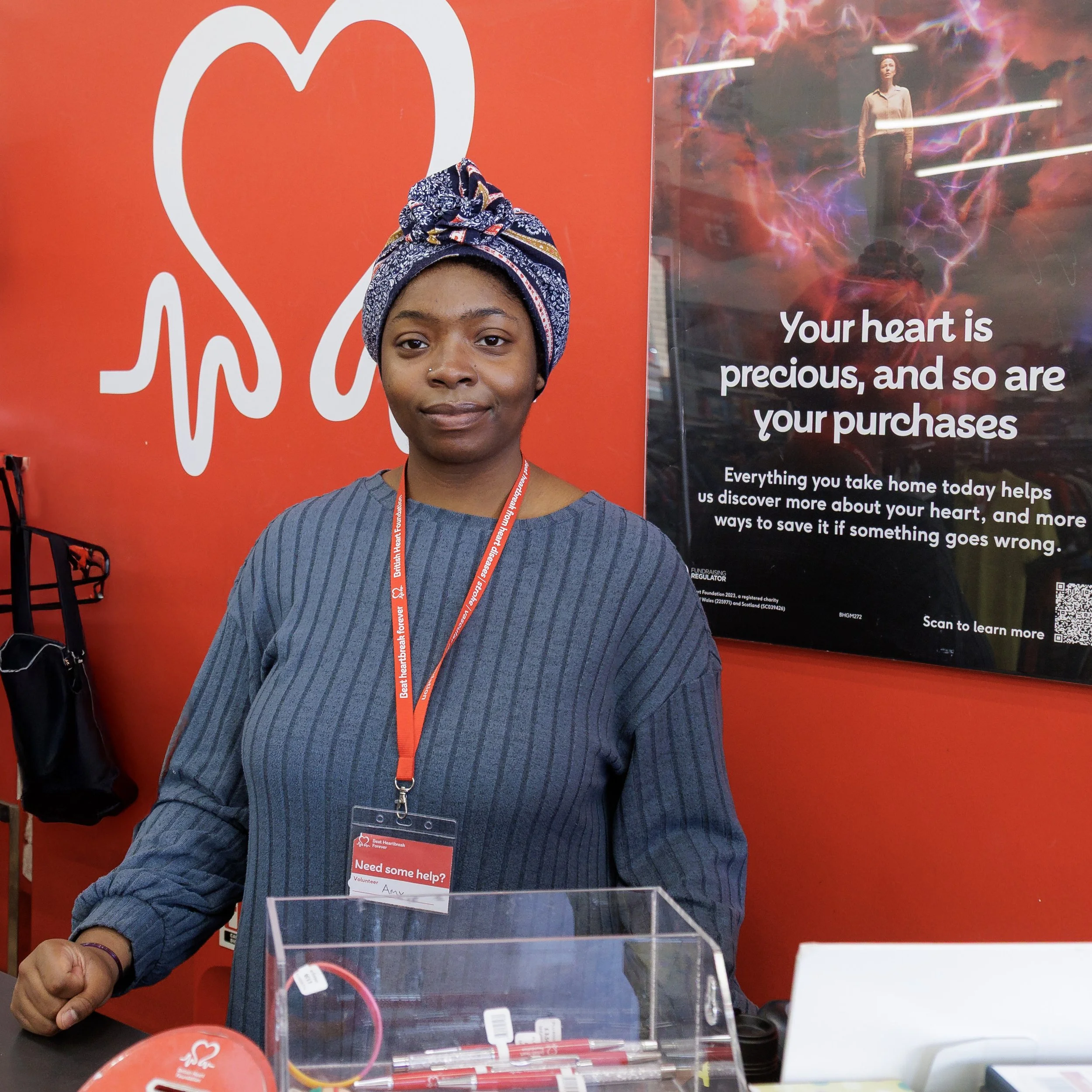
Amy, British Heart Foundation, Craigmillar – ‘I just want to give back’
What led you to volunteer here?
“Honestly, I just want to give back to my community. I mean that. It’s just such a great charity. My nan was a big fan of this shop, and I just like meeting the local people. I can’t say much more than that because this is my very first day in the job!”
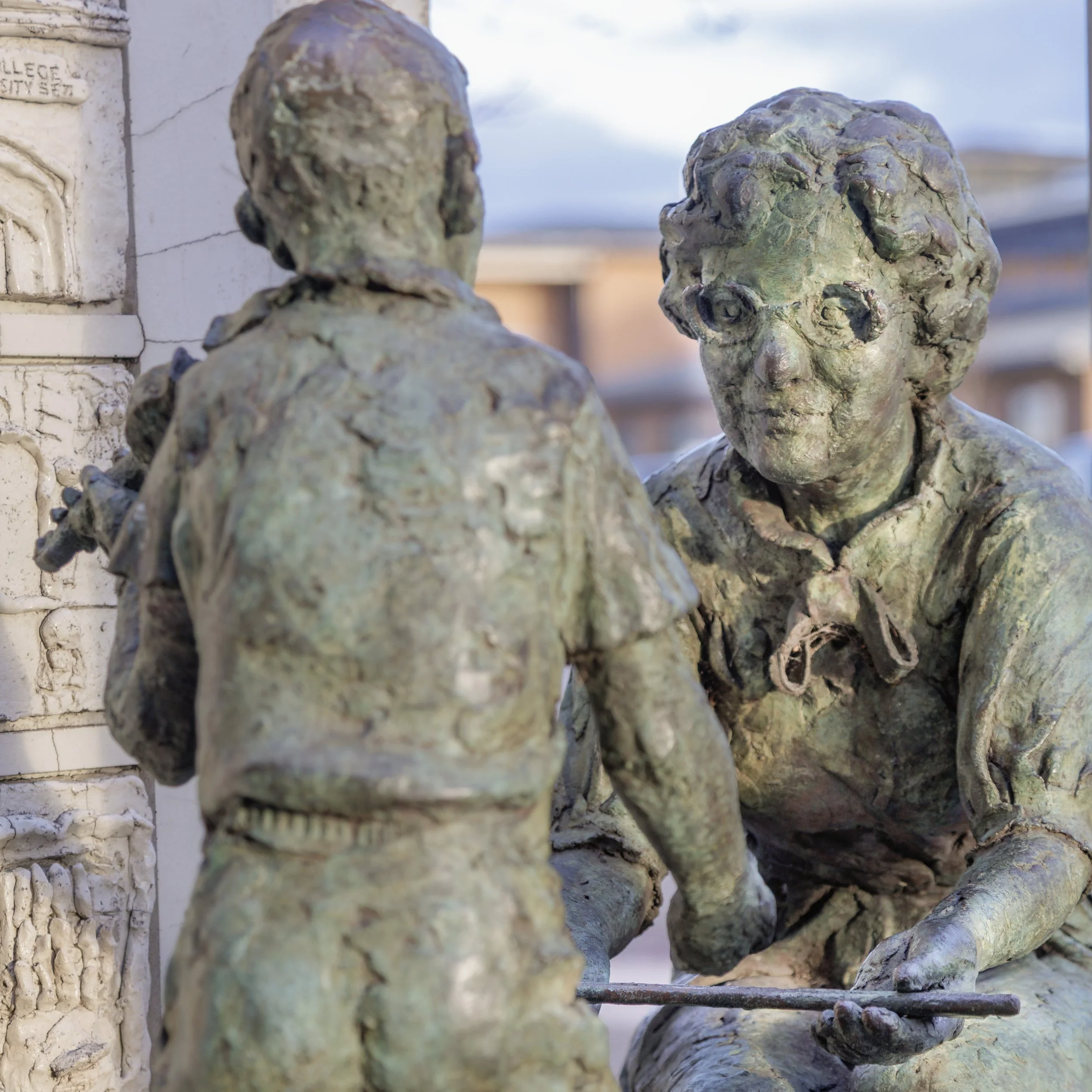
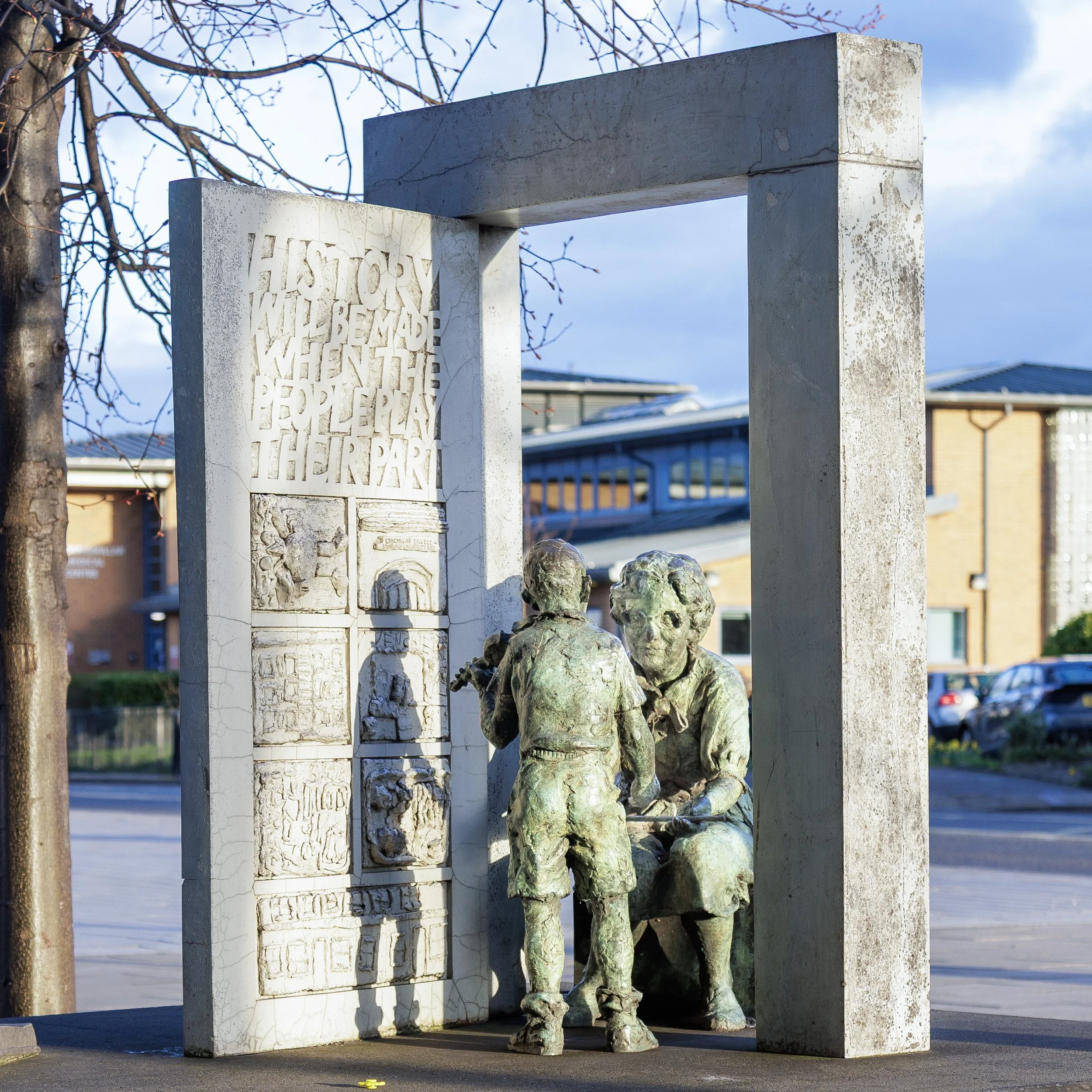
Helen Crummy MBE (1920 – 2011) – ‘that wis no bad, eh?
This statue on Niddrie Mains Road commemorates one of Edinburgh’s most effective ever social activists, political campaigners and community organisers.
Helen Crummy moved to Niddrie with her parents in the 1930s, when even a government minister described the area as a ‘barrack block ghetto’.
Later, when her request for her own son to be taught violin in school was refused by the local headmaster, she went ahead with her local mother’s group to organise what became the Craigmillar Festival to highlight the talents of local children and to campaign for arts and music education in the area.
High profile names like Sean Connery, Billy Connelly and Yehudi Menuhin gave time and energy to support her local work. After Menuhin performed for a Craigmillar audience the story goes that the awed silence that followed was eventually broken by someone exclaiming, ‘that wis no bad, eh?’
Academics and students from all over the world, including from countries then behind the Iron Curtain, came to Craigmillar to see for themselves what had been accomplished through the Craigmillar Festival. Her impact on young people and on a community many would have viewed as among the most unlikely to flourish at that time must be one of Edinburgh’s brightest people-story gems.
Her autobiography is ‘Let the People Sing!: The Story of the Craigmillar Festival Society’.
The statue represents her presenting her son with a violin bow.
That wis no bad, eh?
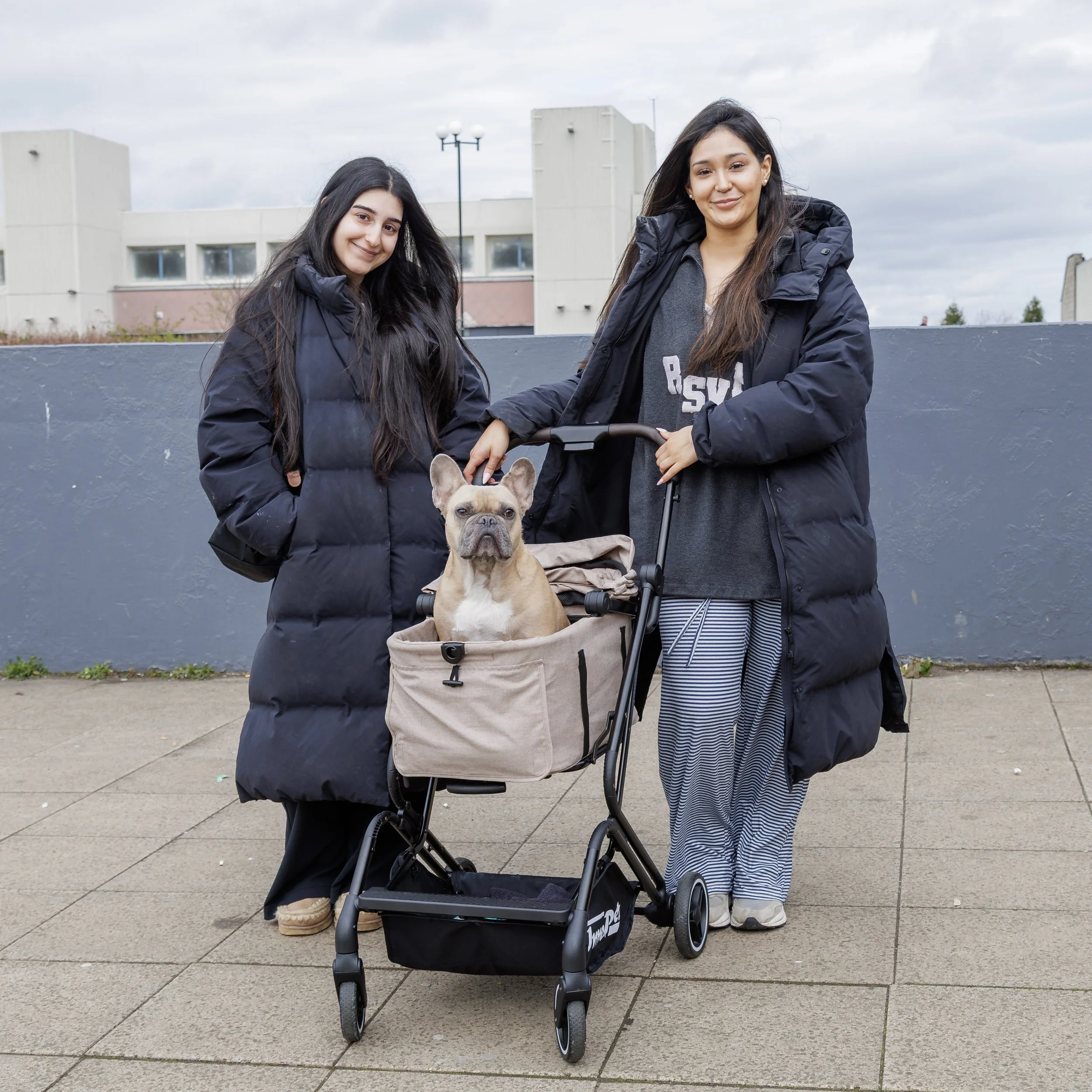
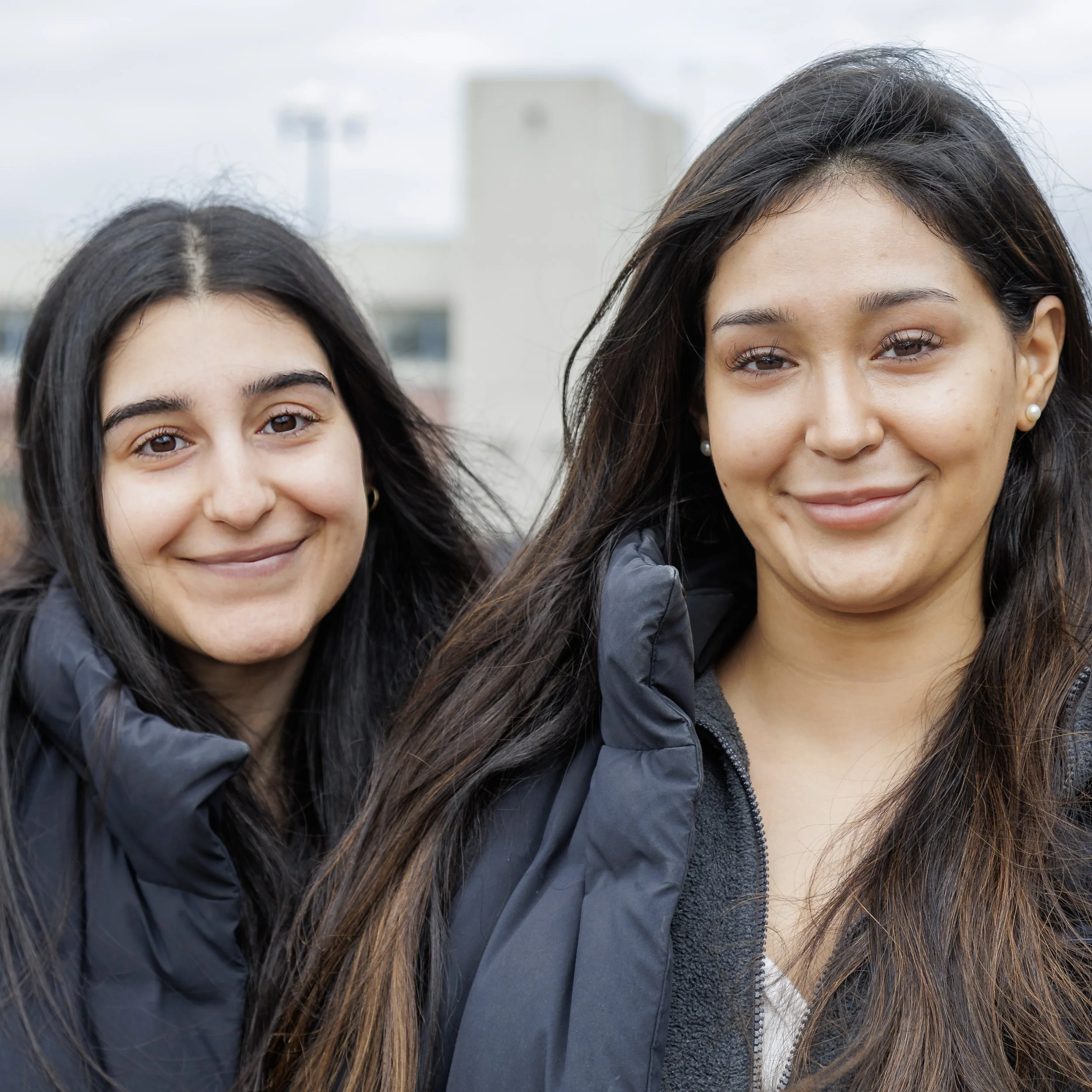
Evin, Helin and ‘Buca, Westside Plaza – ‘seeing both sides of the fence’
Helin: “Helin: “Our parents came here from Turkey 25 years ago. Evin was six months old and I was born here.”
Evin: “Edinburgh has been the best place for us to have had a chance to grow up. It's always been so welcoming.”
How much does Turkish culture feature in your life here?
Helin: “Absolutely, it does. There are so many Turks living here. We know so many people. But I wouldn't say it’s our prime community. We've got a foot in every door, to be honest. Edinburgh’s so multi-cultural. My primary school was super multi-cultural, then high school was predominantly white. So, it was cool seeing both sides of the fence.”
Evin: “After school, we both joined the civil service.”
Helin: “I was working for HMRC, working for the taxpayers. So, if you had an issue with your self-assessment or your VAT, or if you set up a payment plan in the last year, it was probably with myself! But I'm going to pursue further education. I have an interview with Edinburgh Uni. next month.”
Evin: “I'm still there, but I’d love to follow my sister and do something a bit more freeing. The way politics seems to play out - it scares you. It just makes you take the present more seriously, enjoy our company more and look to have more experiences. I’m privileged to be able to say that. I do feel really, really privileged every day.”
Helin: “You can follow your passions here, which is another brilliant thing.”
Tell me about your dog.
Evin: “This is ‘Buca our bestie! We bought him in COVID. Sadly, he had a little accident and was fully paralysed in his back legs, but he had surgery and can walk again, which is great. But we pop him in the buggy just so that he can rest a little bit on long walks.”
Helin: “Frenchies are like tanks, but they have spaghetti noodle spines. So, it's their whole build actually. He's had a slew of medical problems. Yeah, you need deep pockets for a Frenchie, but we love him to bits!”