


Kieran, Leith Walk – ‘there’s a deeper meaning’
“I’m a heating engineer, but football is a big part of my life. I played for both Hibs and Hearts youth teams. I play now for The Spartans, just along the road here. Football’s great for fitness and socialising. The number of friends I have through football is incredible.
But last October I was told I had cancer. I've never known that sort of mental pressure before. I'm a positive person but there were times, especially when I was alone, that I felt so rubbish I wanted to cry.
Until then I was chasing money and career. But I took a step back and realised money's not going to save me. I really started to appreciate the more important things in life like family and doing the things I like. Money and career are not the be all and end all, you know what I mean?”
What helped you most?
“Talking with my girlfriend and my family was a huge help. I don’t have a religious background. I just took life as it came. But since then I've been exploring Christianity and I’m finding my way through that. Spartans employ a club chaplain, and I’d had a chat with him just before I was told about my cancer. Two of my friends are really into Christianity as well. I thought, why is all this coming into my life at this time? I'm in the very early days, just reading the Gospels. But I'm on my way. It’s not always easy to talk about that in my football space, but I feel like I've got the courage now to come out and say it. There’s a deeper meaning in life.
The cancer was removed in December, and I was told recently it’s all away and done. Six weeks after my operation I had to take a radioactive tablet. I was out for a couple of weeks with that, but after that I was kicking a ball again.
I got back to football in February, and I've been fit ever since. They'll monitor me now every three months for a year, and then annually.”
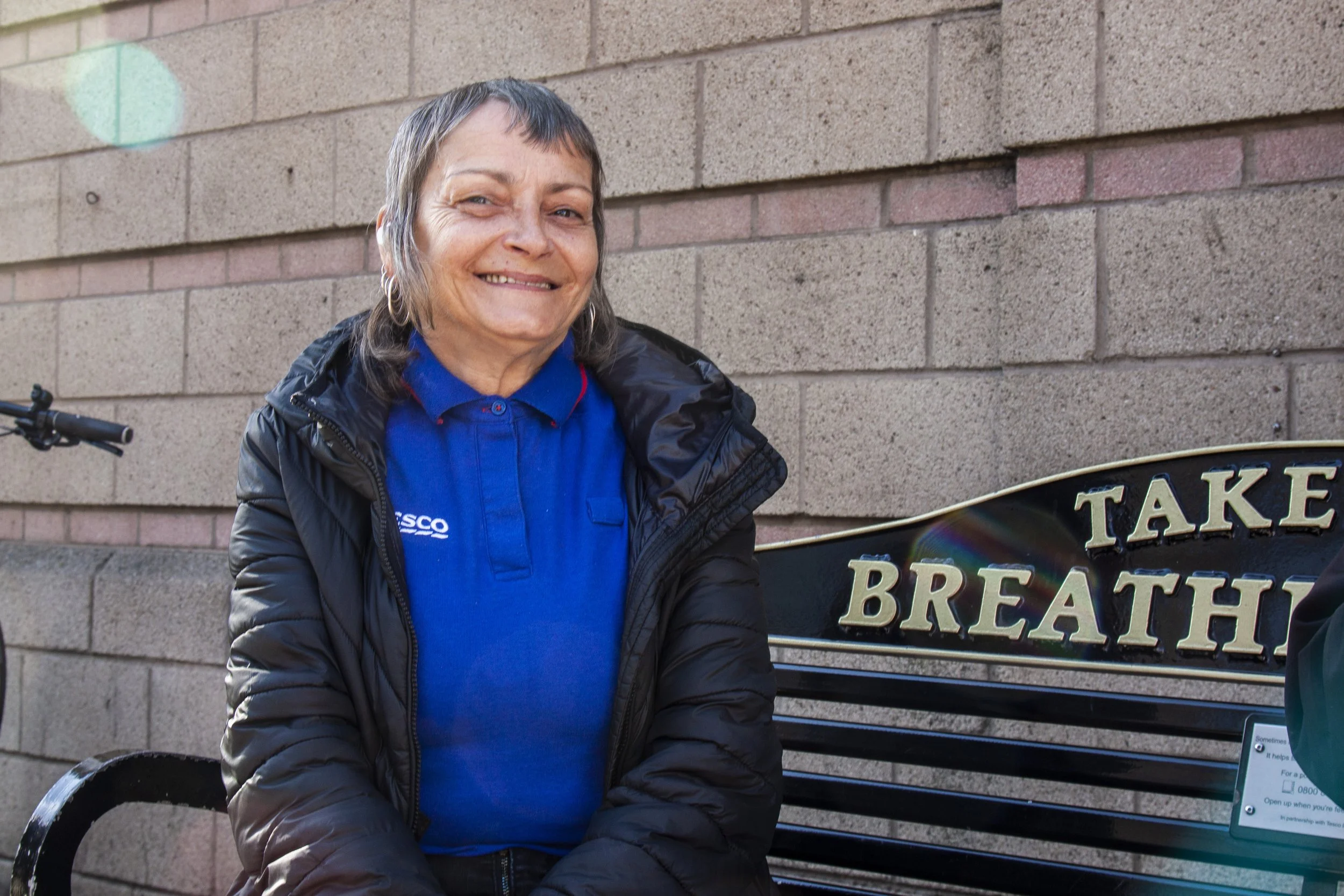
Babs, Duke Street – ‘drugs are for mugs’
“We lost young John McNab along the road there last week. He was stabbed by <name withheld>. It was an argument over drugs. John was just twenty-two. The lad who stabbed him was sixteen. Sixteen!
I was a drug addict for decades of my life. I was on hard drugs, and I’m so so lucky to be alive. A lot of people who did what I did are dead. But I got off them and today I just feel great. I don’t begin to recognise the person that I was then. I just think now, ’Who was she? I don’t know that person.’ I’ve just been to a music festival with friends. We go every year. I get all dressed up in my gear and I love it. I’ve got a job here in Tesco. I’m sixty three, and I’m healthy and happy.”
What would you say to someone who’s tempted to do drugs?
“‘Drugs are for mugs.’ They will wreck you, destroy your life, and very likely take it from you. What they’re selling on the streets as cocaine isn’t even cocaine; it’s a mix of chemicals, and no one knows what they even are. Medics don’t know how to treat the damage they cause because they don't know what chemicals they're dealing with. But it’s rife. It’s all over. Stay well away from them. Well away.”
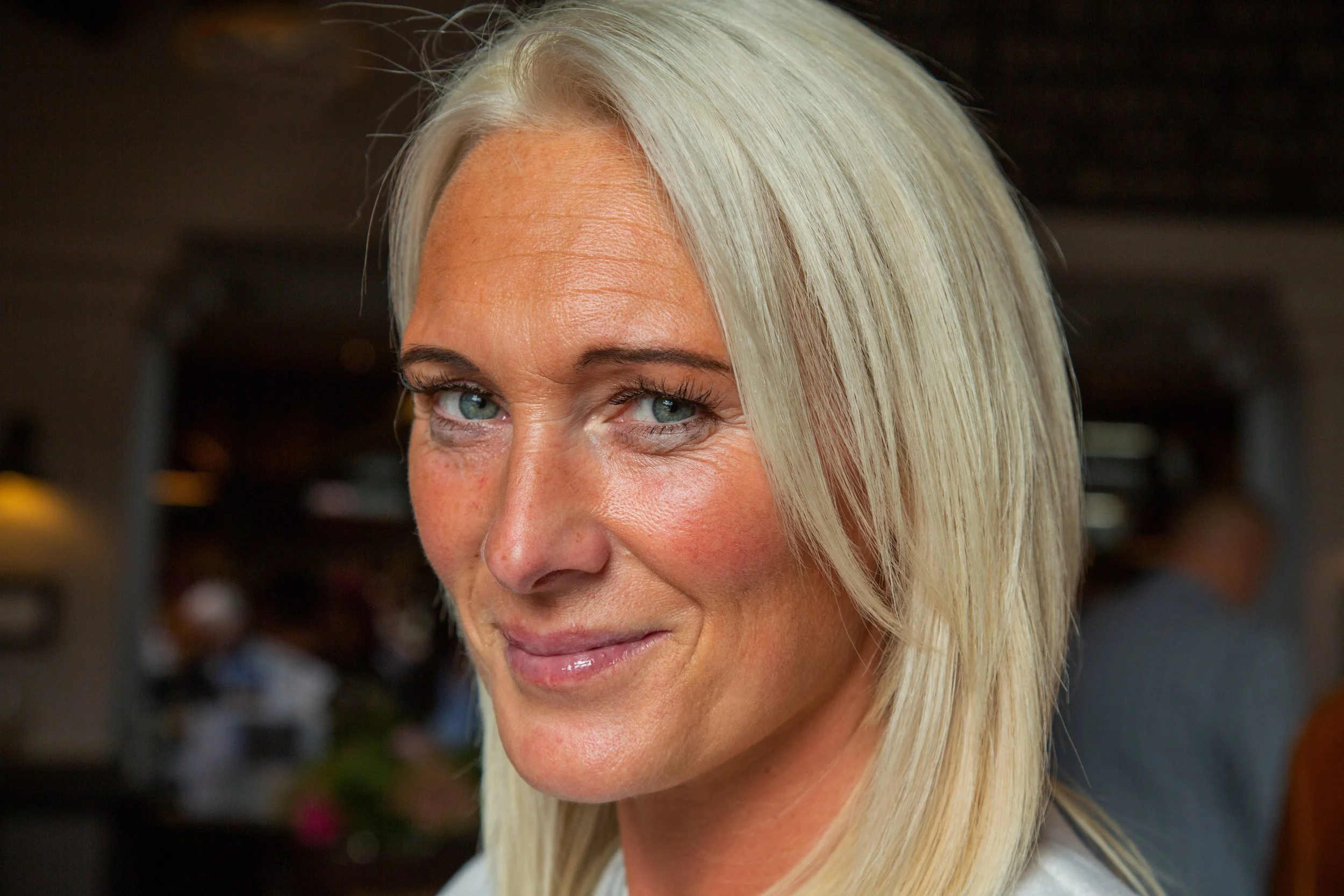
Jo, Waverley Bridge - ‘I can’t live up to that!’
The conversation behind this shot went like this:
Hi! What’s your name?
“Hi. I’m Jo.”
Jo, may I photograph you please?
“Me?! Why?”
Because you’re at the top end of the photogenic scale.
“Are you absolutely kidding? I can’t live up to that.”
Just trust me.
“Well, OK.”
The lesson from this shot is to stop putting yourself down.
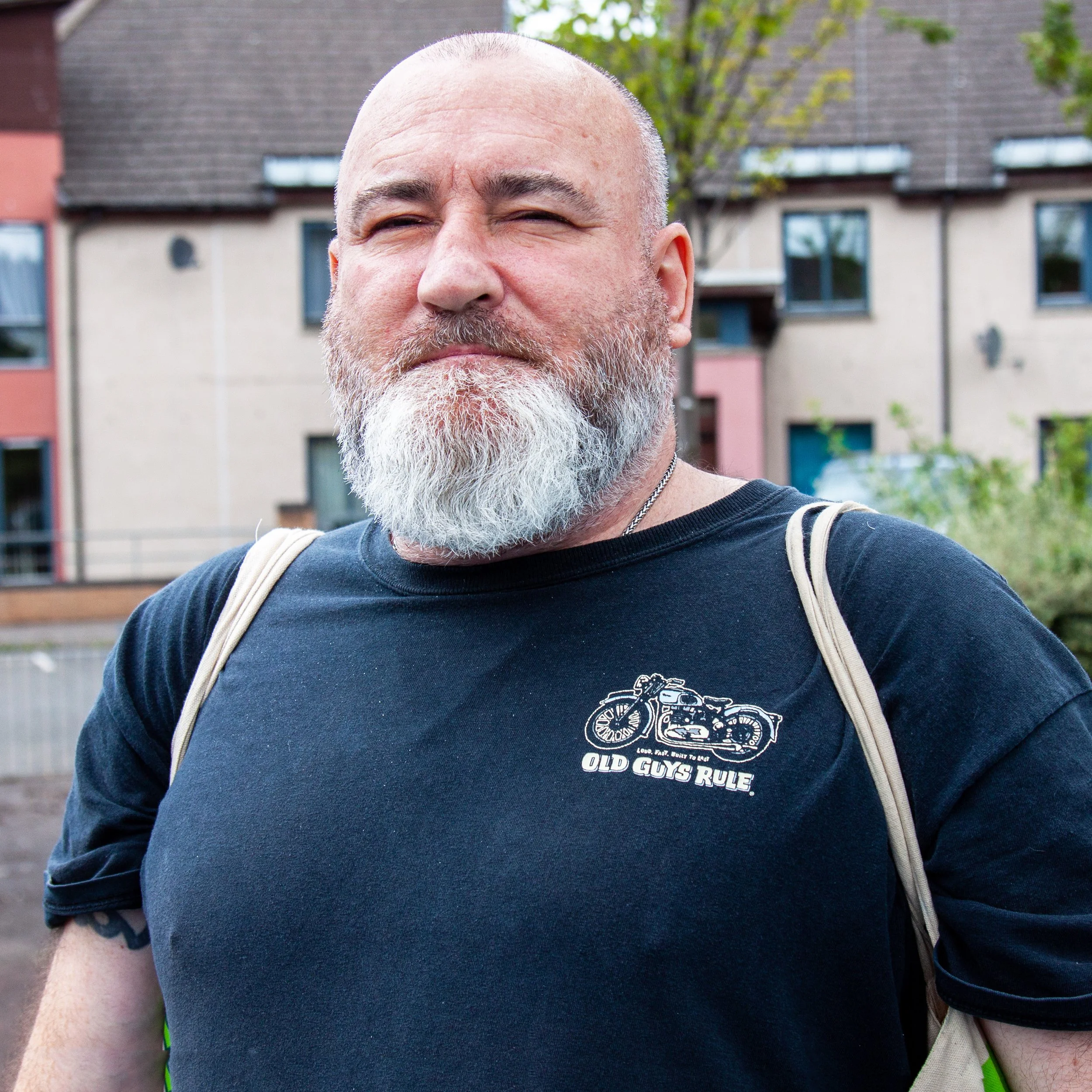
Terry, Duddingston Road West – ‘two wolves’
“I never knew my mum and my dad. I was in children's homes and foster homes from the age of five to sixteen. Some homes were alright, some weren't. There are things I don't want to bring up, particularly. I'm not going down that road. A couple of them that were pretty good, but the majority of it, no.
I've chosen not to see myself as a victim. That's a decision I made. I know people who decided the other way and they’ve dragged that mentality all the way through life with them. It does you no good at all. Seeing yourself as a victim is a bad choice.
When I was sixteen, I had a look in the paper and found a job in a hotel in Pitlochry. So I went there. I retired in 2020 after almost 40 years managing hotels for Best Western in this country and abroad. I’ve lived almost all my working life in hotels.
My biggest hurdle in those years was alcohol. Working in hotels, alcohol is available 24-7. That's my biggest mistake in life. It's caused a lot of trouble. Nothing good comes out of it. It might make you feel good for a day, but the next day all your troubles are still there, and you feel worse. You never do anything good when you're drunk. But I'm alright now.”
When did you drink last?
“Saturday. I went to Glasgow to the Celtic v Newcastle game and I had a few drinks after that. I'm not abstinent from alcohol. But I'm not reliant on it now. I don't get up every morning with a bottle. I've just done a big shop here and there's no alcohol in it.
My plan for retirement is to go back to Pitlochry and run a little guest house. I’ve also written about 200 pages of what might become a book about my story. You’re making me think I should perhaps get back to that.”
What would you call the book?
“‘Two Wolves’.”
Why?
“Because I feel there are two wolves inside me. One is a good wolf, the other is a bad wolf. It’s all about which of those two wolves you feed.”
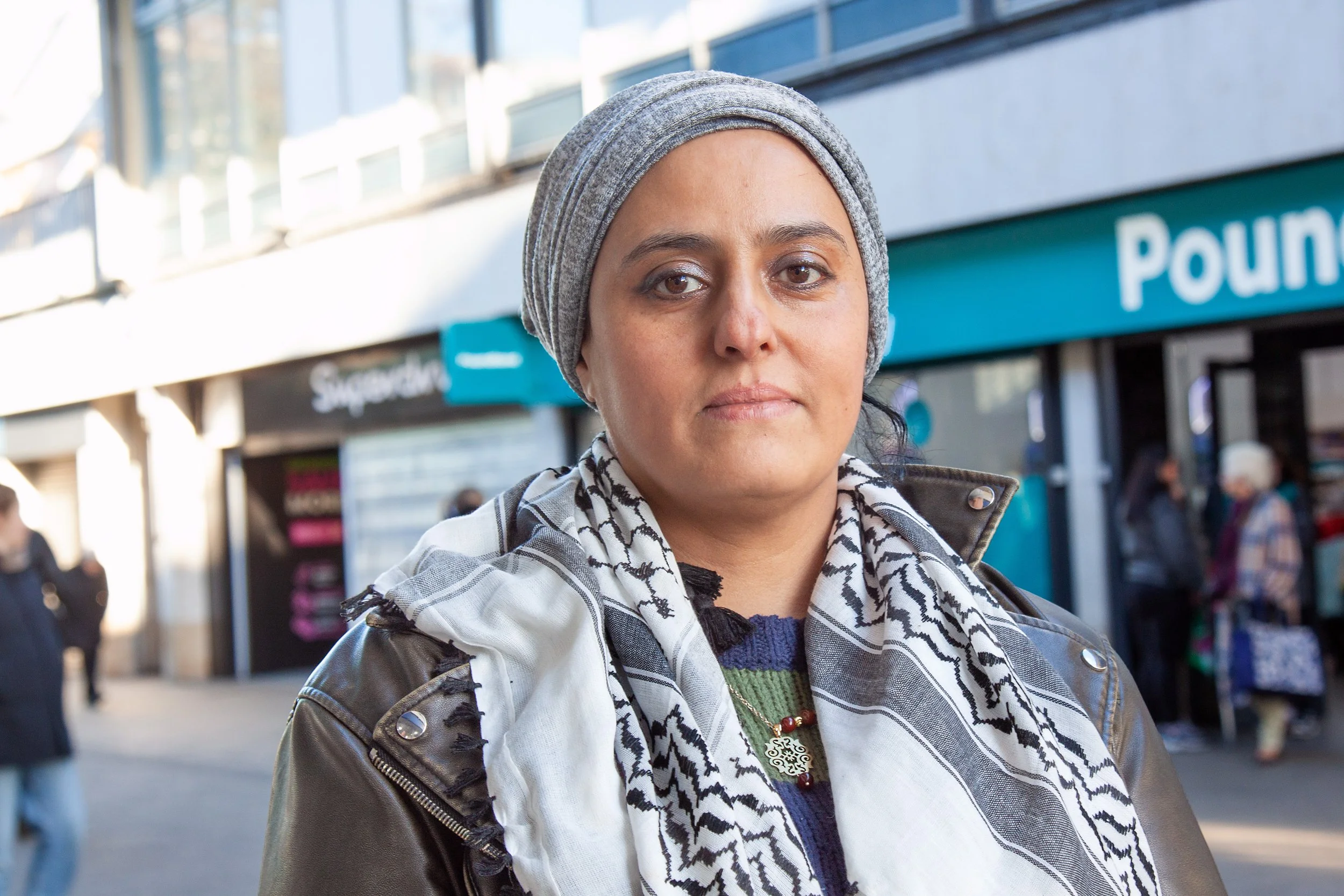
Linda, Kirkgate Centre, Leith – ‘we humans are like wolves’
“I was born in Algeria. I’ve lived half my life there and half in Scotland.
I fell in love with Edinburgh on the first day. I love the architecture, I love the country, and I love the people here. I’ve made a lot of friends. I have three children, a 14- a 12- and a 10-year-old. They are Scottish, with very strong Scottish accents, especially my youngest!
What do you do?
“I teach Arabic and French. And I do voluntary work on behalf of the people of Gaza, especially for the past two years. I'm not part of any organisation, more of a freelancer. The people in Gaza have been subjected to atrocities for two years, and I find it emotionally very difficult. But I'm an optimistic person. And the people of Gaza are incredibly resilient. They have a strong faith, they love life and have very strong families. They’re robust and resilient.
This has been very hard. But the biggest challenge is to remain yourself. If you’re a good-hearted person you should never allow life to change you, even in difficult times.”
What do you prioritise within yourself?
“My liberty, my dignity and other people. We need to care about others. Life is very fast now. We don't seem to take time to stop and think about the ‘why’ of life. There is too much emphasis on money and power and social media junk. And I hate all these big corporations and large companies taking over. We humans are like wolves – we need our pack. For many being alone has become normalised. In Scotland, and here in Leith, we still have caring communities, but we need to work more on bringing people together. I would love to go back in time, perhaps the 80s, when people had more connection.”
If you could go back and meet your 16-year-old self, what would you say to her?
“Worry less and live in the moment. We think about the future a lot, but we should live in the present because we don't know the future.
And smile. It's free!”
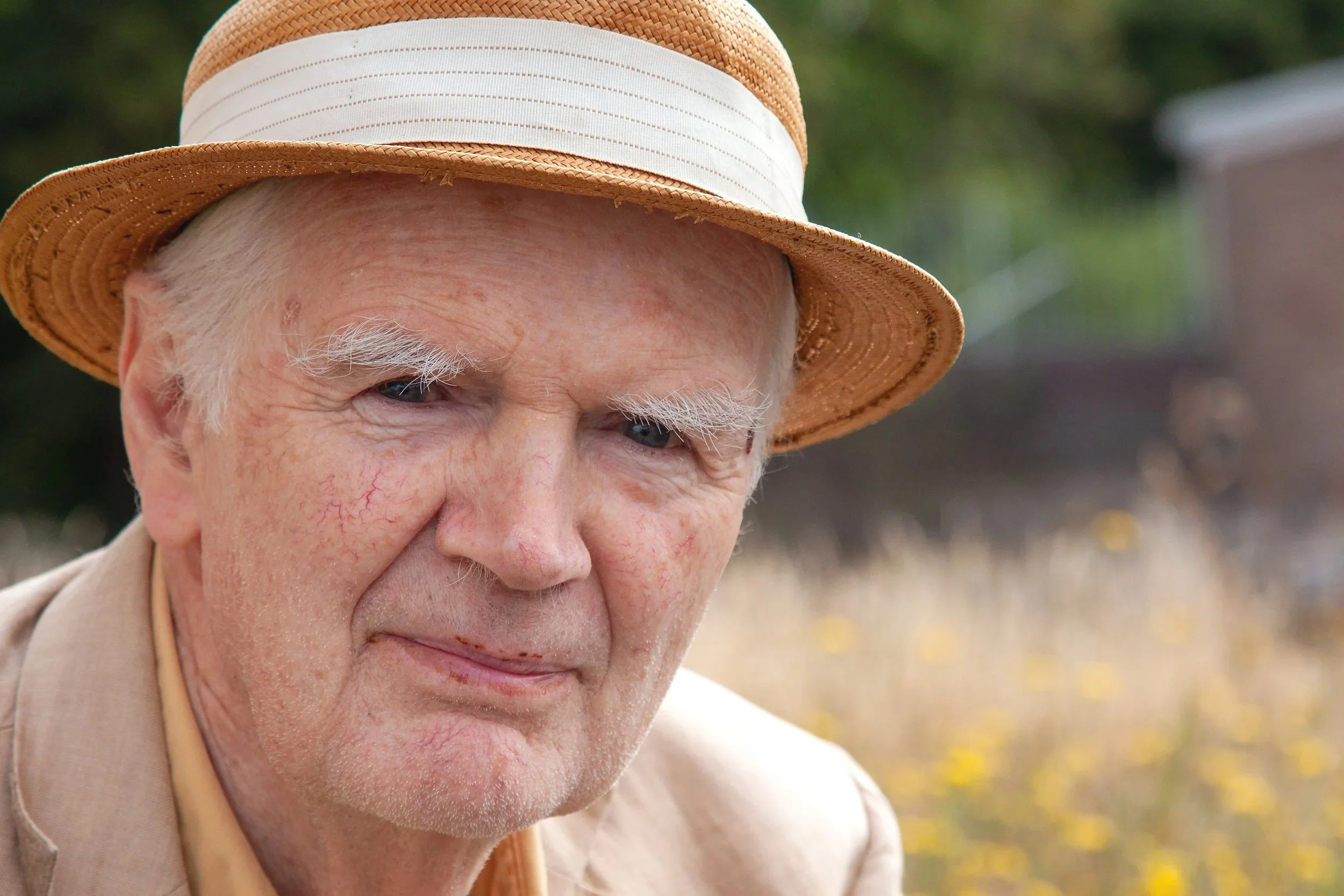
John, Niddrie Farm Grove – ‘not what I’d have chosen’
“I was a professional photographer, freelancing mainly for the Scotsman and the Glasgow Herald. I’ve photographed just about anything you can imagine.
I’m living alone now. It’s not what I’d have chosen, but it’s how things evolved. There are superficial benefits; you don’t have to answer to anyone else, and the place can be a tip, or whatever, and you don't need to worry. But, no, it’s not what I’d have chosen.
So, getting out to meet people is very important. I got into a community arts project at Kinnaird Park called Craigmillar Now a couple of years ago. I've been archiving photographs of Craigmillar going back to the ‘70s and ‘80s. It’s been good company with a diverse mixture of people.
I still find photography a medium through which I can express my thoughts and feelings about the world. I do landscapes mostly now. I love places like East Lothian and the West Highlands - anywhere near water, really.
And I play the piano. Mostly the blues.
It’s a great sort of music.”
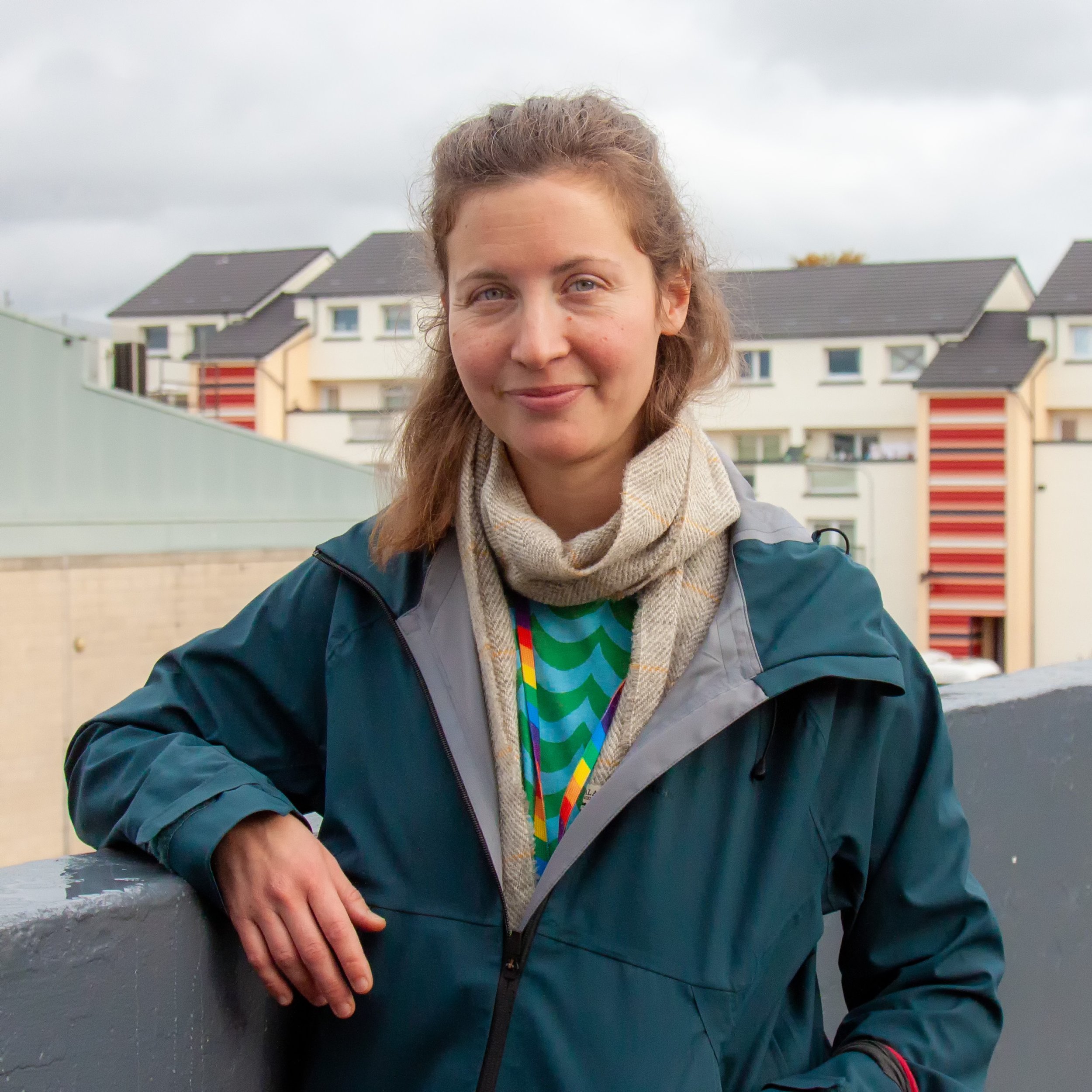
Rebecca, Westside Plaza – ‘a life-changing thing’
“I really like the sound of your project, but I’ve only minutes before I’m due in a meeting.”
Okay, just a quick question then. Have you ever surprised yourself with what you can do?
“I work for a musical children's charity which involves me with lots of young people. But there was a time when I’d never have seen myself doing what I’m doing now. I was a very withdrawn person, not at all confident about mixing and speaking with other people.”
How did that change for you?
“It began to change when I found myself in situations where I was helped by people I didn’t know. Then I started to put myself out there into other situations where there were lots of unknowns and things that were beyond my control. It pushed my boundaries, but I landed on my feet largely because of the people who were around me. Just that confidence in people has now led me into this community work and has certainly helped me build up circles of friends.
It’s been a life-changing thing.”
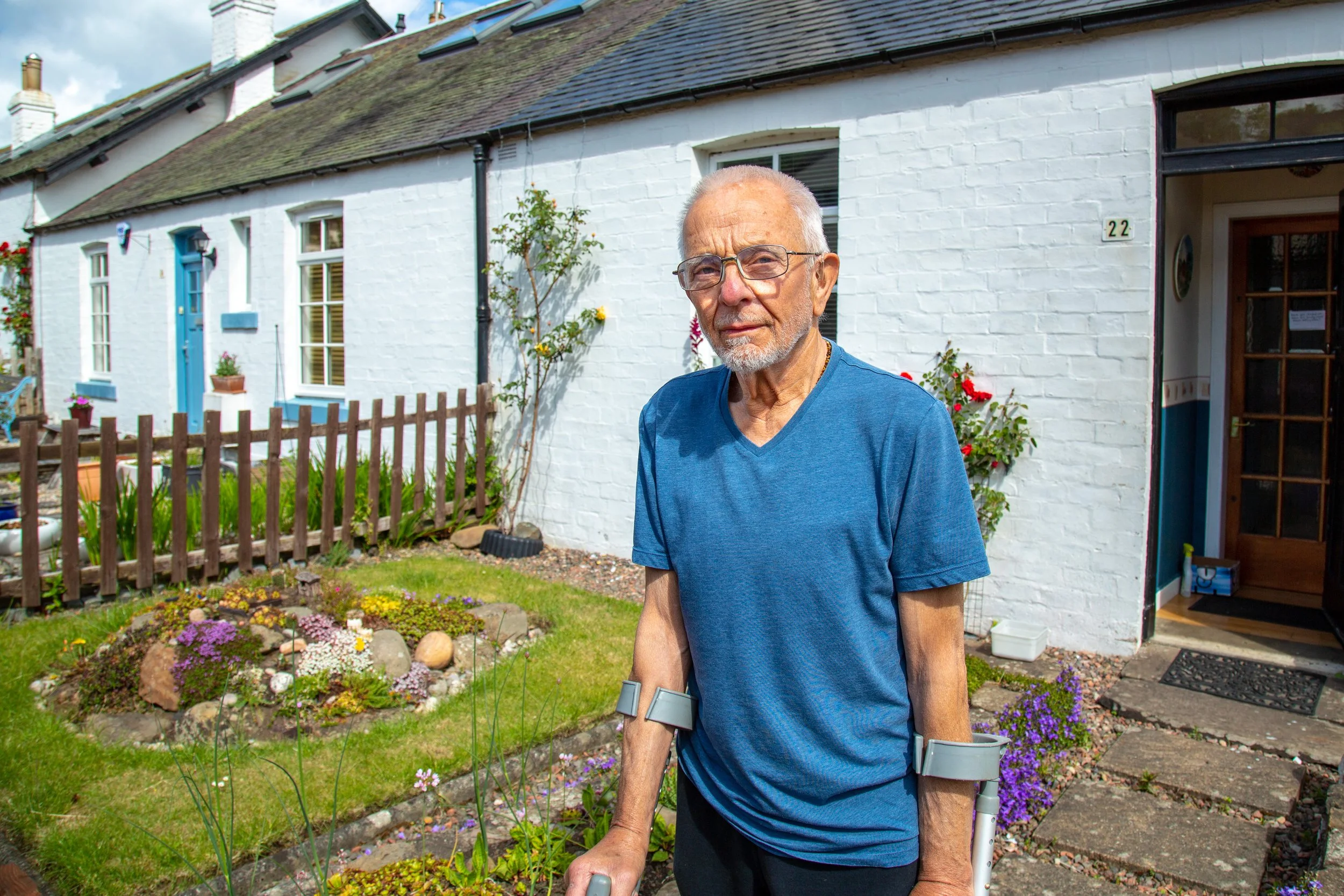
Peter, Colinton – ‘I’m contemplating a tattoo on my left earlobe’
“Now that I'm 80, I'm contemplating a tattoo on my left earlobe.
All my life I've looked at earrings and tattoos and thought, ‘No, you can't do that.’ I think it was being a lecturer - and because wives don't like tattoos.”
What tattoo would you like?
“So, I might get a small circle of blue and green to represent the sea. I've got a long nautical ancestry. One of my ancestors fought at the Battle of Trafalgar.
I wondered too about one on my hand … perhaps a little clock reading five to midnight, right? Because I fully acknowledge the presence of the Grim Reaper. I’ve got a Grim Reaper on the back of my motorcycle helmet. And underneath I've written, ‘The other three are close behind’, because the Grim Reaper is one of the four horsemen of the apocalypse.”
You have a motorbike?
“Well, it was either that, an invalidity carriage or a mobility scooter. No way was I going to get on a mobility scooter. So, two years ago on my birthday I bought a new Honda Grom 125cc. I used to race motorbikes. The minute I get on my motorbike, I’m sixteen again.
On top of that I'm training magpies at the moment.
There’s one in particular that comes to visit. I put food down quite a long way away from me and it comes down. Then I put the food nearer and nearer to me. But I noticed last night he’s waiting now until I go in. He must know now that I'll only sit there for so long, because the minute I went into the house last night, the damn thing was down.
By the way, I'm not normally on crutches but I've just had a knee done. So today I'm just going to deal with some green fly.
There just aren’t enough hours in the day.”
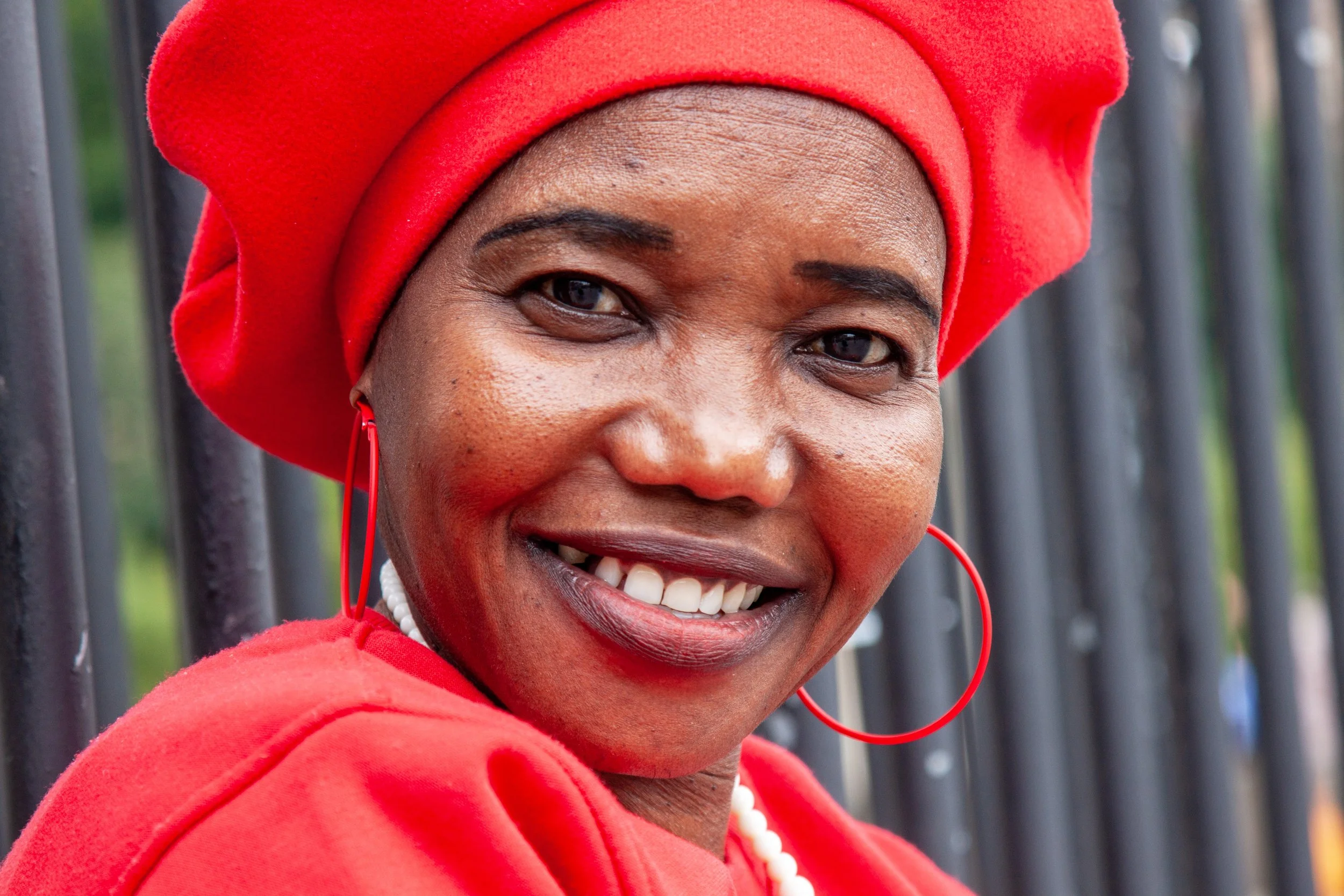
Christina, East Princes Street Gardens – ‘safe and free’
“I was a singer for 30 years in South Sudan. We had to leave Sudan with our children when war broke out. We fled first to Egypt. My husband left us there, so I am a single mum with four boys aged 12, 14, 18 and 20.
Now God has made it possible to come to Edinburgh. I thank God for everything. The people here are good. I joined a church when I came and within four days I was singing in the choir. I have made many friends. I love them and they love me. When I go to church they say, 'Hey, Christina, we love you!' This is the love God wants us to have because we are one in Christ.
It's not easy being a single mum, but I want all my boys to go to university now that, at last, we are safe and free.”
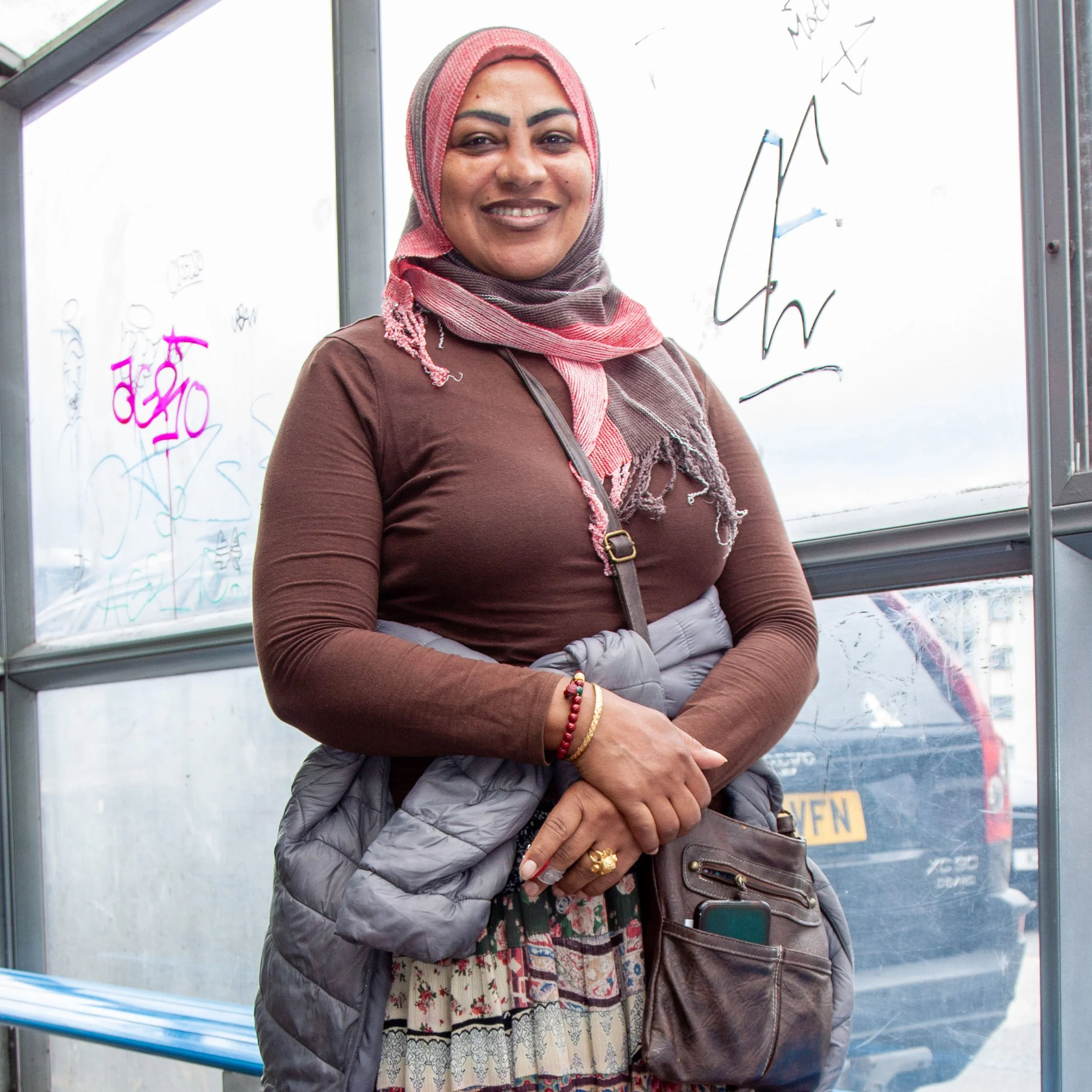
Sally, Niddrie Mains Road – ‘you made me feel seen’
When I saw Sally waiting at a bus stop I was immediately struck by her aura of quiet dignity. She readily agreed to be photographed and interviewed, but no sooner had I photographed her than her bus arrived and she had to go.
Weeks later we met by coincidence in a supermarket. She said to me, "‘I was sorry I had to leave that day. I am a single mother, and I work full-time. It is hard. Often, I feel invisible and alone. But that day you made me feel seen. When I went onto the bus people were looking at me, wondering why I was having my photo taken at the bus stop. You made me feel like a celebrity, and I’ve wanted to thank you for that. So, thank you.”
Probably the most rewarding aspect of this project for me has been the number of people who have expressed gratitude for the opportunity to engage and talk honestly with another human being. It doesn’t have to take long; it just has to be genuine.
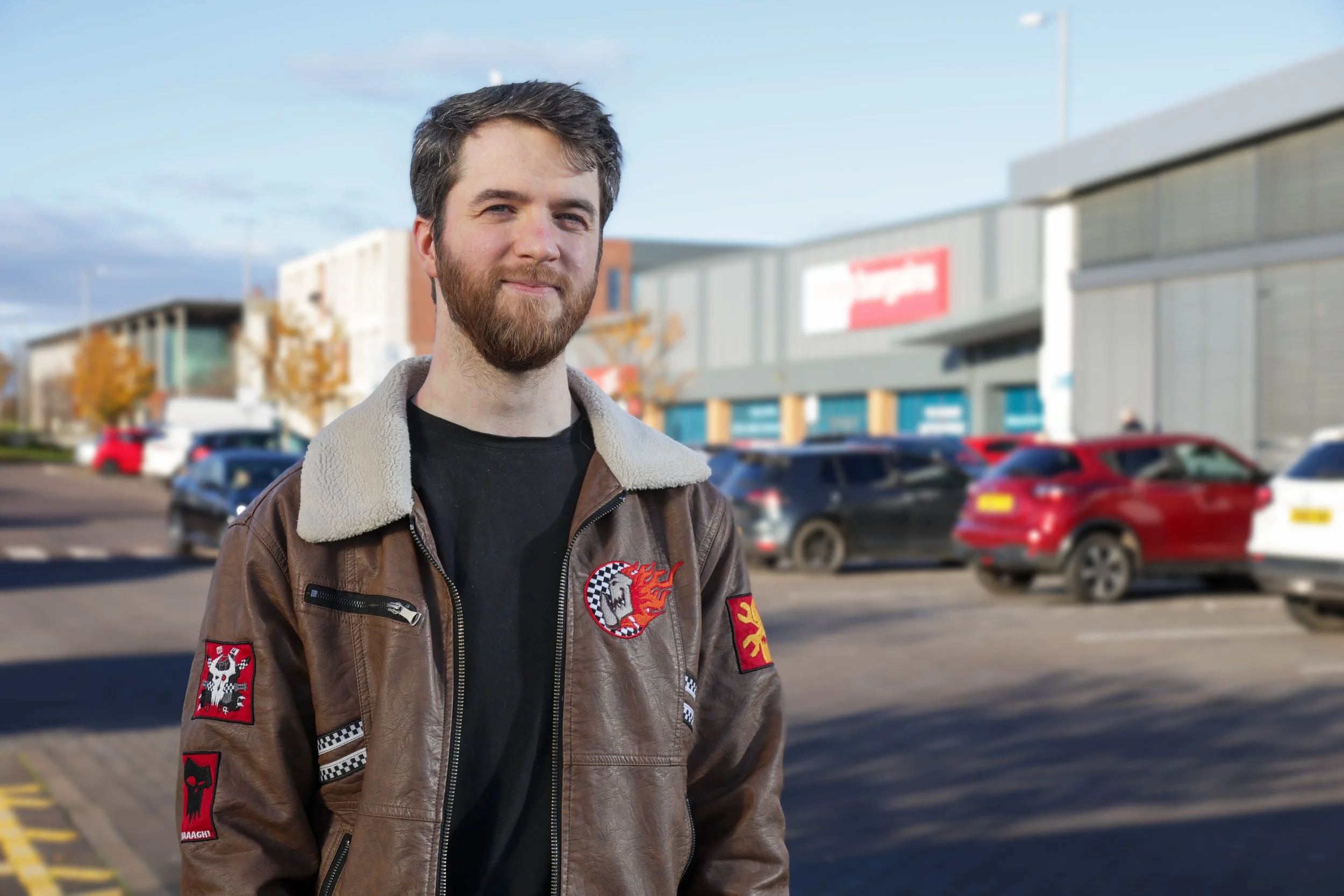
Jack, Niddrie Mains Road – ‘bucking that trend’
“I like equilibrium, just maintaining a steady state. I always remind myself, ‘This too shall pass’; that the highs of life are fleeting, and the lows of life fade. But this is also a time in my life for more internal development.”
What would that look like?
“Well, doing this interview is pretty big! I'm quite introverted. When I go out into nature it's usually by myself. I have trouble making friends but I push myself and try to connect more with people. That's a challenge I've been setting for myself in the past couple of years. It’s been important for me.”
What role do family and friends have in your life?
“The thing about my friends and family is how they keep our connection open. They’ll call and say, ‘Hey Jack, come round. It’s been a while.’ I appreciate that. The in-person contact - you can't replicate that. They have that prioritised. That's not something I really see a lot of. You don't read many articles about how people are more connected these days. So, the fact that my friends and family are bucking that trend is invaluable to me.”
How do you like to relax?
“Well, I love the weather in Scotland! Whether it’s a grey day, a sunny day, a rainy day or whatever. I enjoy even the walk to and from work. I love to walk near rivers. There's one near my house, and one on my way to work. They’re quite noisy just now, which is lovely to hear.
And I like to travel. Japan was amazing. Japanese culture exemplifies what I go for, which is that every day is happy and optimistic. There's more harmony there in people’s lives. They retreat regularly, perhaps to some temple out in the woods. I don't think people here would be as eager to go out to some country church in the middle of a village. It's less of a pilgrimage, much less ‘escapeful’. I think there are a lot more opportunities there to express and develop spirituality.”
Do you think we could learn from their lifestyle?
“100%.”
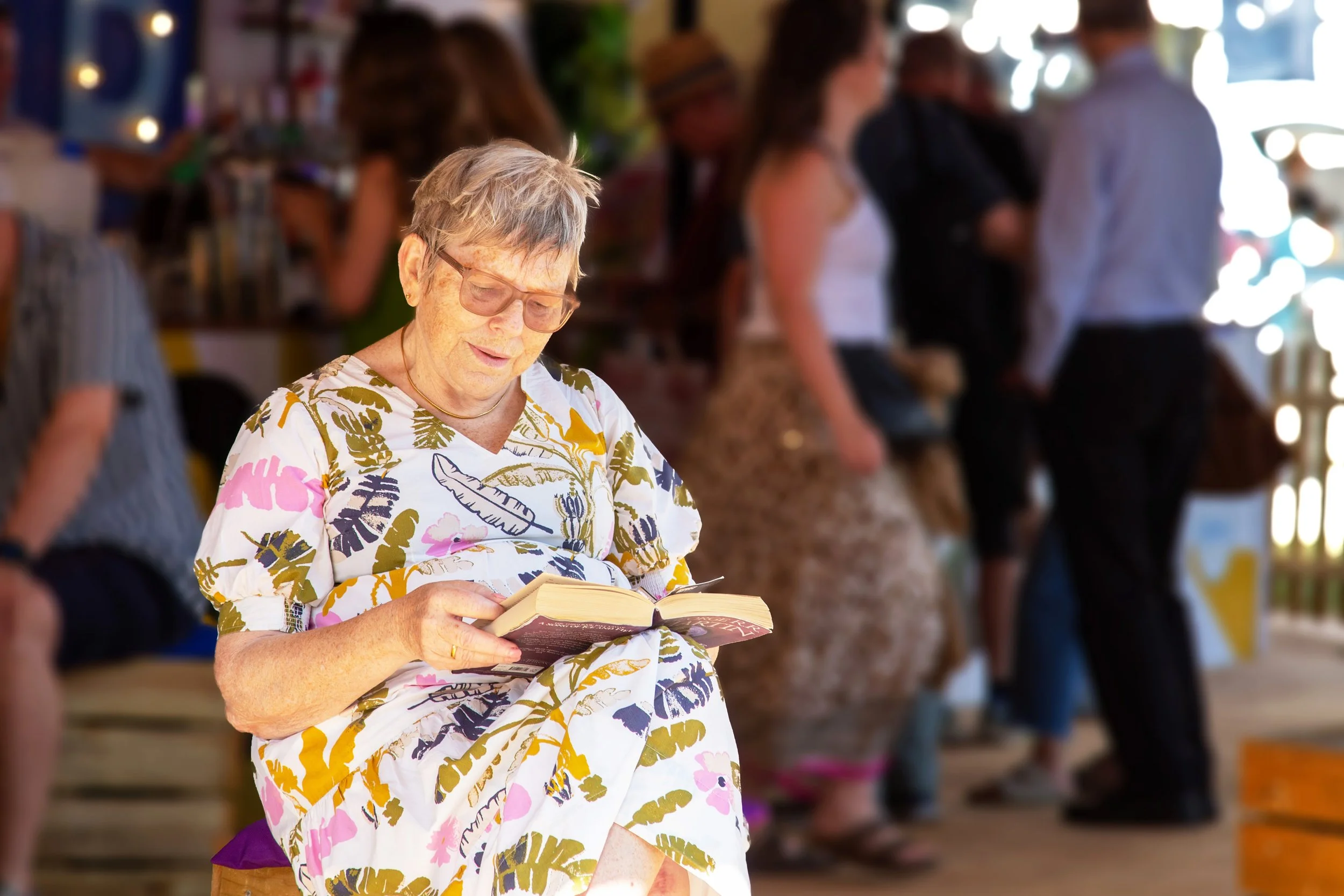
‘Lost in a Book’, Edinburgh International Book Festival
“Reading is an exercise in empathy; an exercise in walking in someone else’s shoes for a while.” — Malorie Blackman
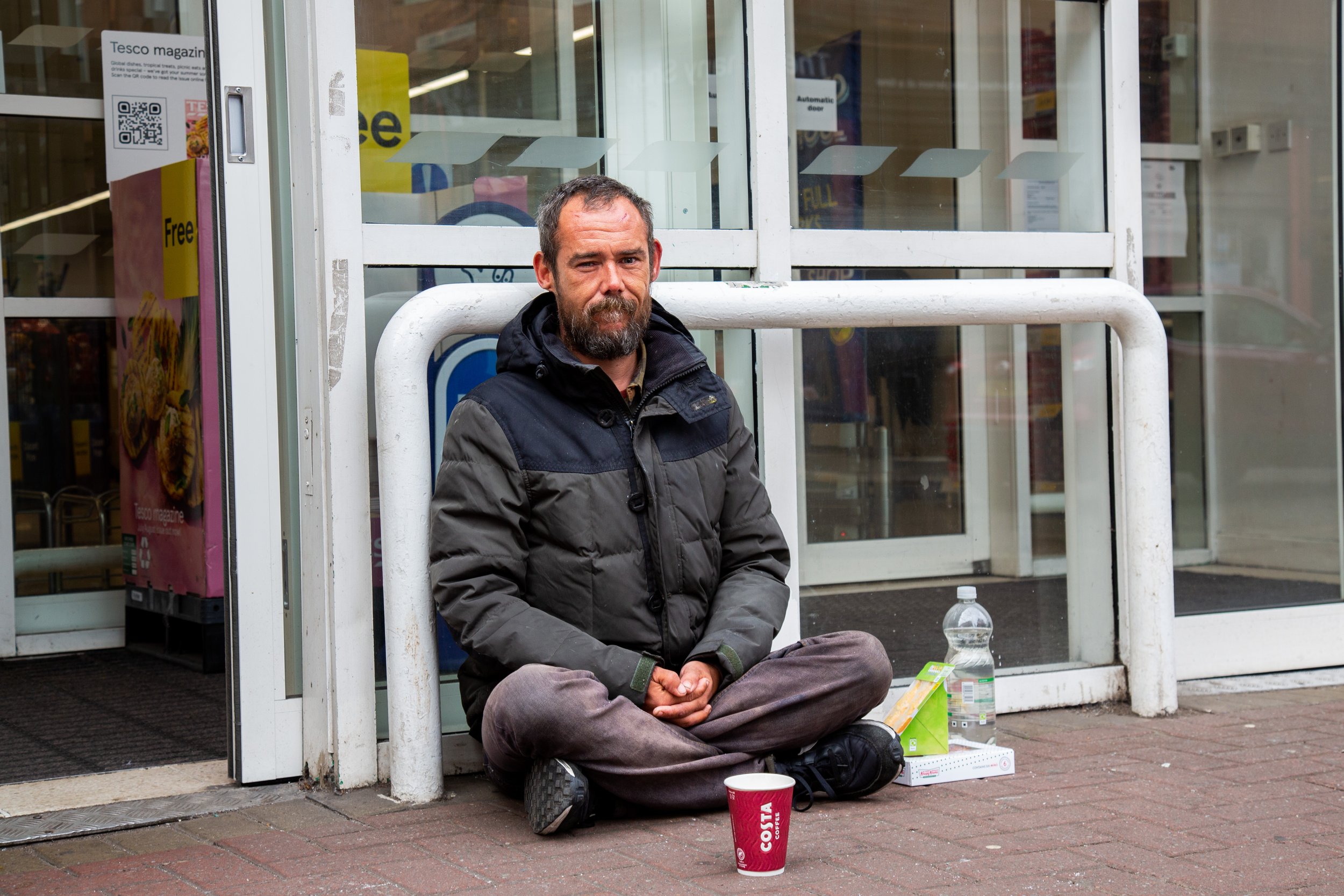
Stephen, Duke Street – ‘if I do go to jail’
“I had a nervous breakdown about 10 years ago. I was diagnosed as bipolar. I think it was a loaded gun waiting to go off. It was problems that had started with childhood and abuse and things like that.
It's made me pretty much unemployable. I get benefits and stuff like that, but it's never enough. You need to go out and supplement it. Most mornings I come out to do my begging after the breakfast rush until about 12. If I make something I usually live off that for the day. It’s enough to take the sting out of my balance, but it's starting to dry up these days.
I may be facing a jail sentence in the next couple of weeks. So I could just be on the verge of losing it all again.”
What happened?
“I just don't like people that take advantage of you, and people that bully. I've been bullied my whole life, and it really gets my guard up. My mother always taught me to stand up to bullies. I refuse to be a victim anymore. I refuse to let people bully me.”
Did you have a go at someone?
“Yeah. I'm hoping for a suspended sentence. I go up on the 8th. I'm not really going to dwell on it until the judge tells me one way or another. But I'm worried. If I do go to jail, I'll lose the tenancy and my benefits and all that. I'll be right back to where I started, homeless and destitute again. And then I really will be on the streets.
And then it won't be just going out and doing this for the morning. I’ll be out all day then.”
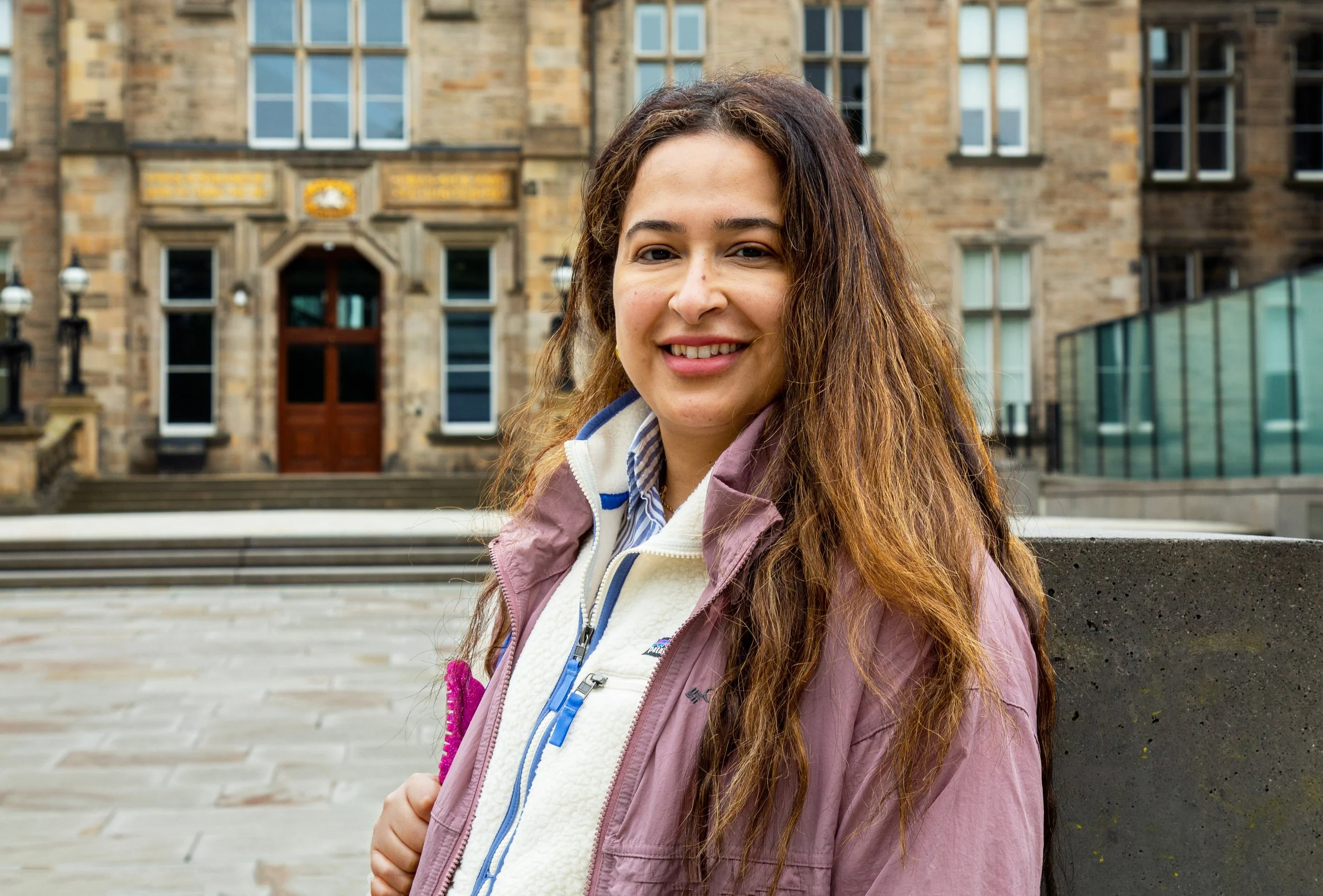
Hessa, international PhD student - ‘sometimes it’s just baby steps’
What’s been your best decision?
“I think to pursue my PhD. It’s not very common or easy for people after they've established themselves to go back into studying and academia. So, I went to Bahrain University and studied accounting. On graduating I went to Citibank, then I moved to the USA to work for the United Nation’s Development Programme. I was advised to study public policy. That was 2001, and that advice has sort of driven my career for the past 24 years. I applied for the Fulbright scholarship. I got it and went to Denver Colorado to study for a master's in public policy. And now, 24 years later I’ve just completed my PhD in social policy at Edinburgh University.”
What’s been your worst decision?
“You know, in general, I don't really have regrets in life. All decisions are either good decisions or you learn from them. I don't really have regrets, you know, thank God. I feel I'm still young enough to be able to correct everything that I don't like. So that's something that I think is great.”
Do you have a philosophy or a faith or a principle that guides you?
“Yes. I’m a person of faith. I pray, and I’ve done the Haj, the trip to Mecca. There's a surah from the Qur'an which says, ‘God does not change a person's lot unless they change what is in their hearts’. We need to take responsibility to change what’s within ourselves, the things we can change. That’s a great philosophy.
I think it can get challenging for everybody. It’s life. You have difficult situations. People get ill, people pass away. There's a lot that can happen, but at the same time it doesn't matter where you are, you must really focus on what's the next step. Sometimes it's just baby steps.”
If you could go back and visit your 16-year-old self, is there any advice or encouragement that you would offer to her?
“Yeah, I would say, don't worry, it's all going to work out, and you can do it all. I'm always a little bit hard on myself in the sense that I kind of feel like it has to be now or never. Knowing what you want in life is not something that you need to know immediately, and you can always figure it out. But I think don't get hung up on certain ideas, you know, and be open and just know that you can do it all. You know, don't get worried about it.
Yeah, be happy.”
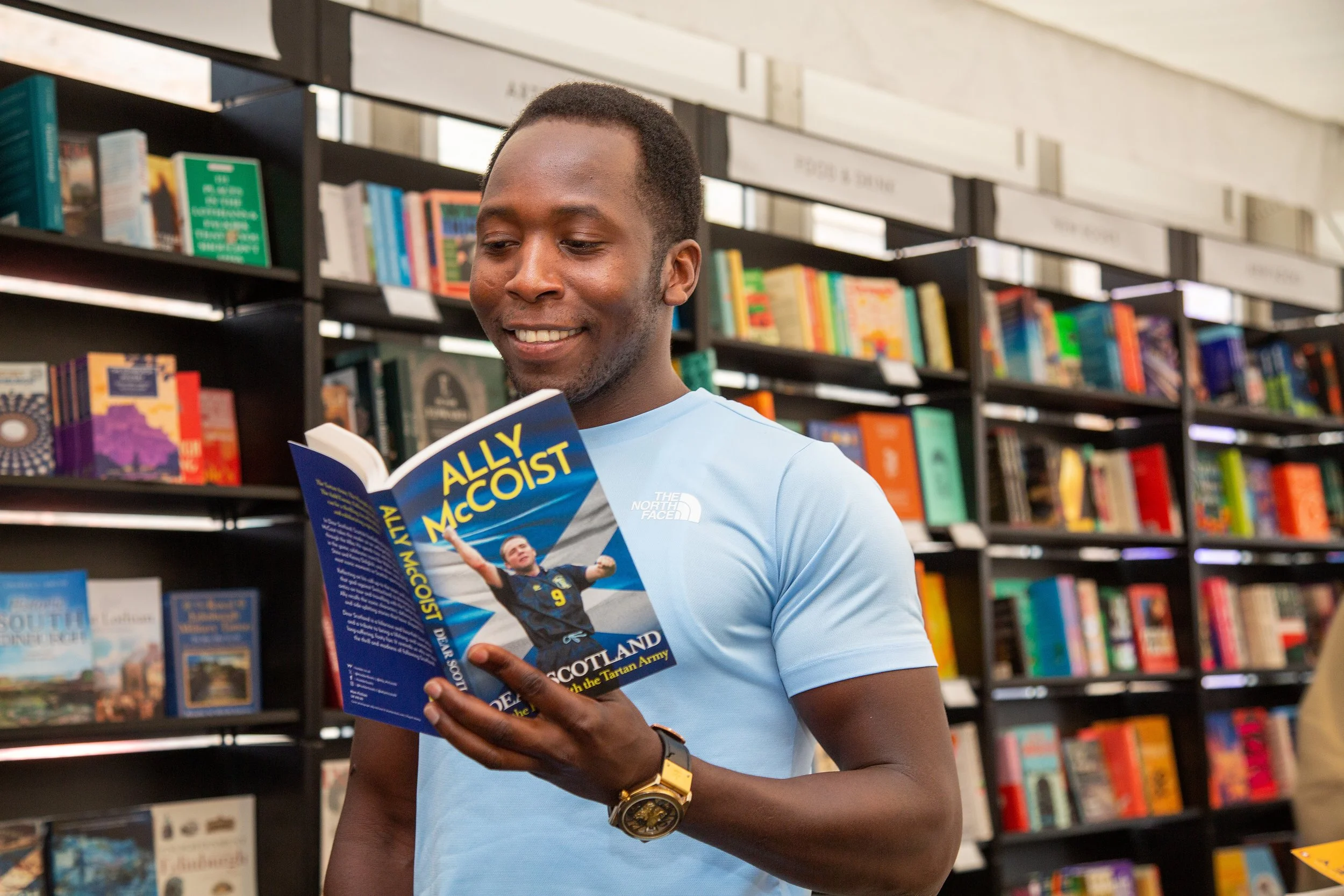
Safir, Edinburgh International Book Festival, - ‘every single minute’
“I value life. I enjoy every single minute, because when we leave this life we can't come back. I enjoy getting to know people, studying, learning, working, achieving, moving around, visiting different places and discovering new things here in Edinburgh. I love helping people.
I came from Sudan aged fourteen. I come from a traditional Sudanese family that believes in family, godliness, thinking about the future and trying to understand life. I think that is the right mindset. And I feel completely at home in Edinburgh. I just love it. I love being here and I hope to be here forever.
In Sudan I used to worry I would grow up without completing a good education. But when I came to Edinburgh, I took every opportunity. I studied physics, chemistry and biology in school and then studied electrical engineering at college. I’m on a gap year now before going to university. I do taekwondo and play football and even if I’m not competing, I stay active every day.
But I worry about divisions in society. Countries are splitting up. I feel like we’ve started splitting even as friends. I saw this in Sudan. It is a big challenge for young people to make the right decisions. I believe it is good to travel, to get perspective on different cultures. And I think we need to stop listening to influencers and instead to ask fresh personal questions about the purpose of our own lives.
My grandfather gave me five codes for life when I was young: make an impact for good in your country before you die; achieve something that no one’s done before; always support the people in your life – you can help hundreds, thousands of people in your lifetime; don’t rely on the Police for your security, but cooperate with the Police for everyone else’s safety; always represent your city in a good way.
Mindset is vital. In fact, I’m writing a book about that on my phone.”
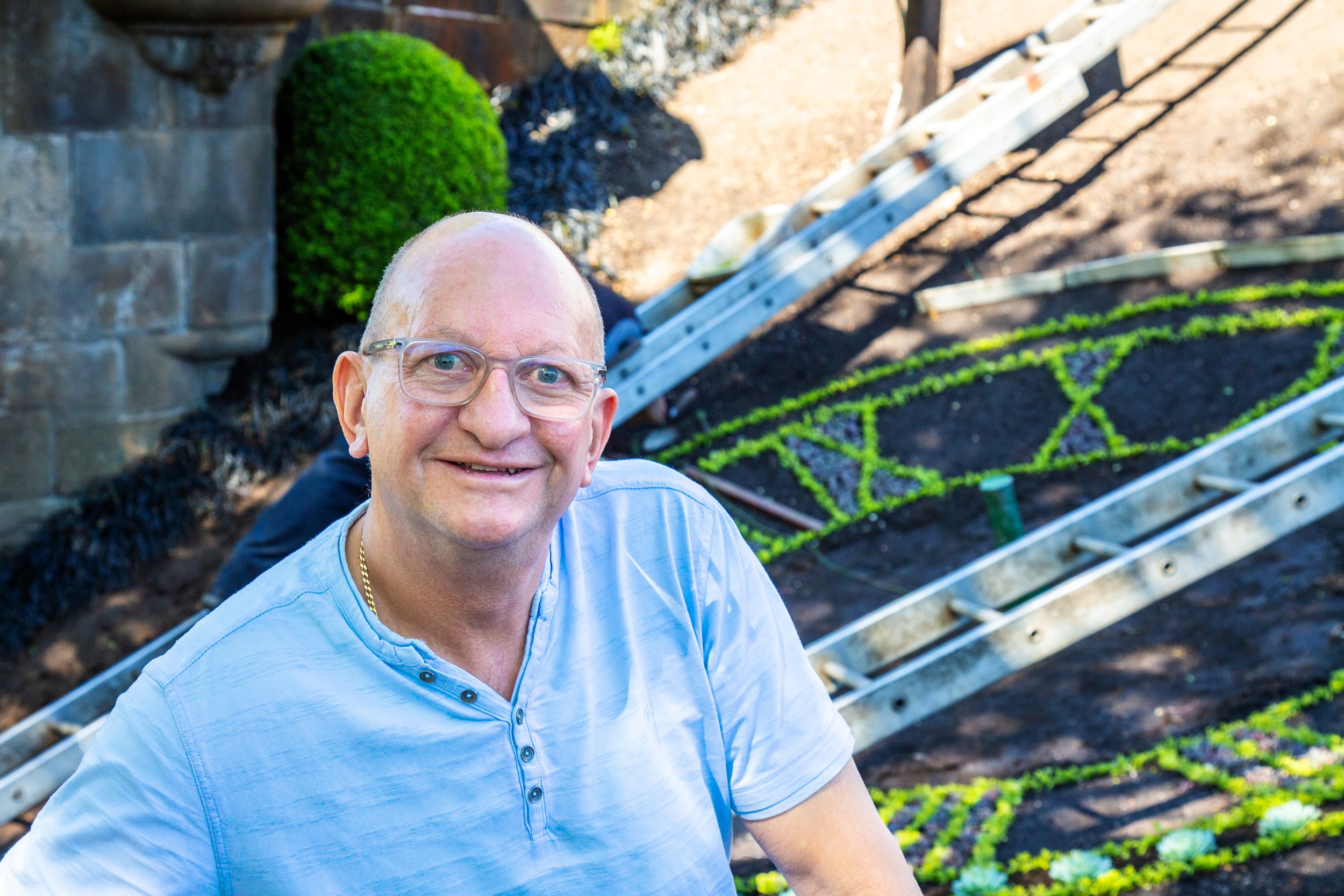
David, Floral Clock Supervisor, Princes Street Gardens – ‘it’s been running now for 123 years’
“The clock started in 1903. The first clock just had an hour hand, and the minute hand was added in 1904. So it's been running now for 123 years.
We've had it square, we've had it diamond-shaped, but we're more traditional just now; it's circular so that we can get anniversary logos round the dial of the clock.”
How long does it take to build?
“The planting itself takes around about six weeks with two of us working 5 days a week. As you can see, we work from ladders so it's not something that you can move about easily. You've got to keep getting off and back on again. So it all takes time.
There are 30 to 35,000 plants that get put in by hand. Any one of those plants could cost you a fiver or more in a garden centre, but we winter a lot of them and use many of the same plants year after year.”
Do you enjoy gardening at home?
“Yes, I do. My own garden is my happy place. I make new discoveries all the time.”
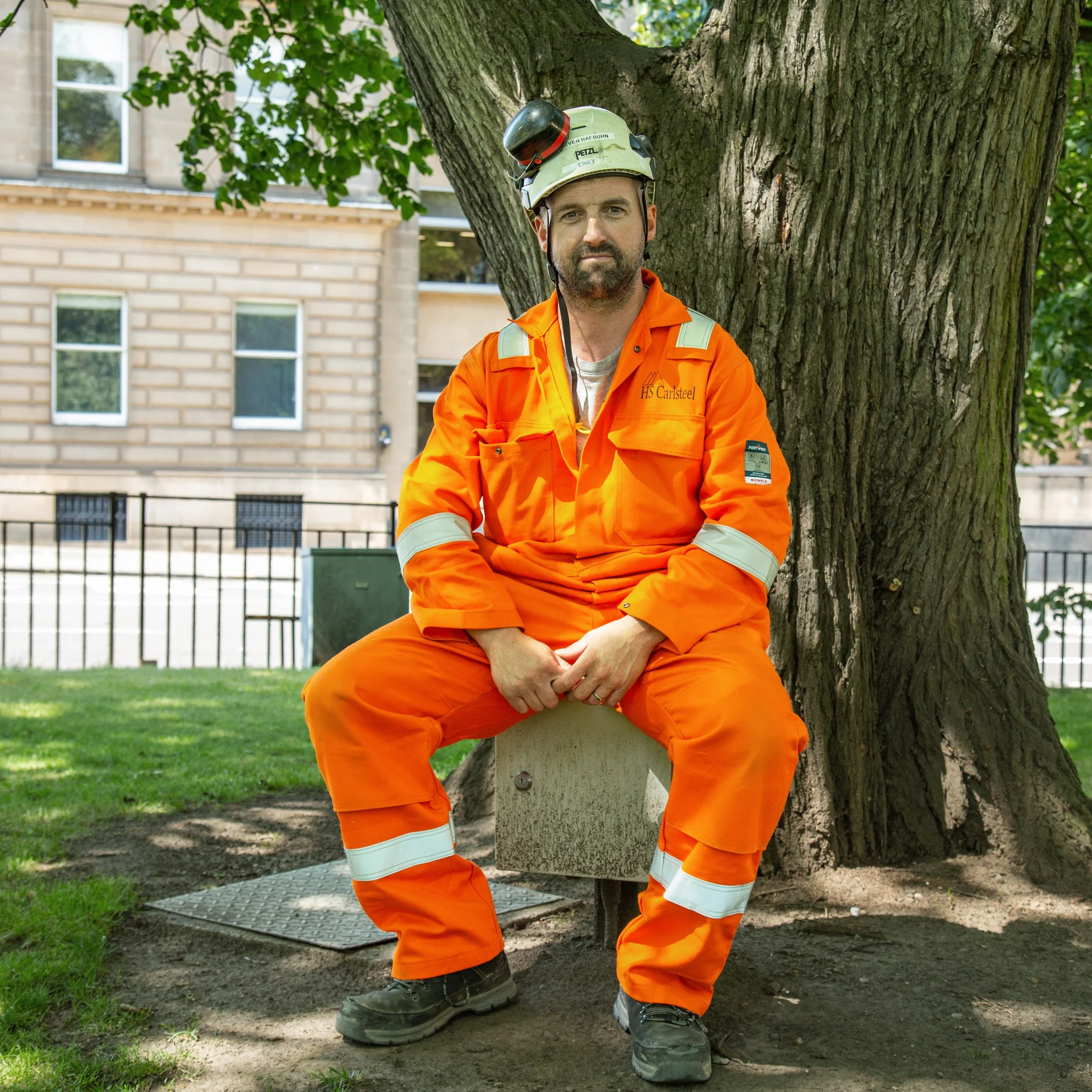
Steven, St Andrew Square Garden – ‘they’ll all be there waiting for me’
“Becoming a dad has just been the best thing in my life. It’s definitely calmed me down, and it makes me think before I do anything in life. I mean, it’s a handful but the good outweighs the bad.
We have four, two boys and two girls: Lincoln is eight, his little brother Grayson is six, then the two girls are Honor who’s five and Fallon who’s all of nineteen months.
Yeah. They’ll all be there waiting for me when I get home.”

Tarfah and Mahla, Calton Hill – ‘our best life’
Tarfah: “Unfortunately, most people have a wrong idea of what life in Saudi is like for women. We absolutely live our best life over there. We’re free to go wherever we want. Of course, there are huge differences in culture compared to living in Edinburgh, but one important similarity is how safe we feel in both places.”
Mahla: “Yes, people are very kind and lovely here, and we see lots of families out together which is very nice.”
Tarfah: “Family is one of the most important columns of Saudi society. We are literally like one unit over there when it's a family. We studied in Edinburgh and we’re back because my brother – Mahla’s husband – is receiving his PhD. But we have come as a family with our parents. And to me Mahla is my sister, not my ‘sister-in-law’.
But I see a difference in how we deal with our elderly. We do not put our parents or grandparents into institutions. Their families care for them, 100%. We all take care of each other. So, I have my grandmother, and my uncle and aunties also take care of her. We have a schedule, so every month she stays in one of her kids' houses. She also has a nurse, just in case.”
And is that typical across the country?
Tarfah: “Yes. Absolutely. We have a lot of respect for elderly people in our culture.”
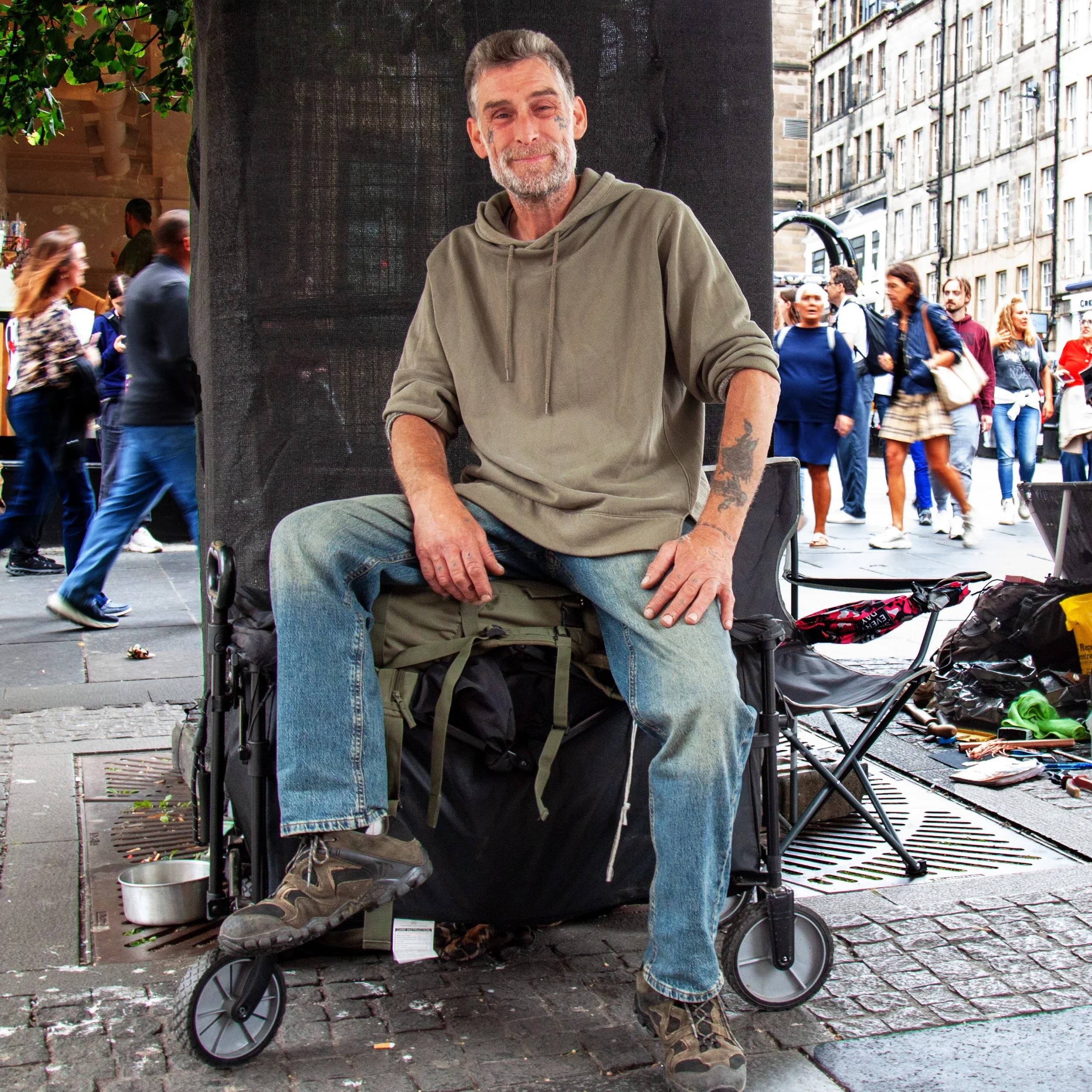
Mark, Royal Mile – ‘I’ve killed people’
“I was a Royal Marine for 14 years. I was in Afghanistan and other places most people haven’t heard of. I’ve killed many people and seen things I don’t want to talk about.
I’ve been out of the military now for four years. There was no help at all for transitioning into civilian life. I was a violent and angry man with no idea how to channel my aggression outside a military setting. I was married to a beautiful lady from Barcelona, but she left me because of my outbursts. I’m getting there now, but I’m pretty much still living on the streets with my old Rottweiler.
There’s something wrong with that, isn’t there?”
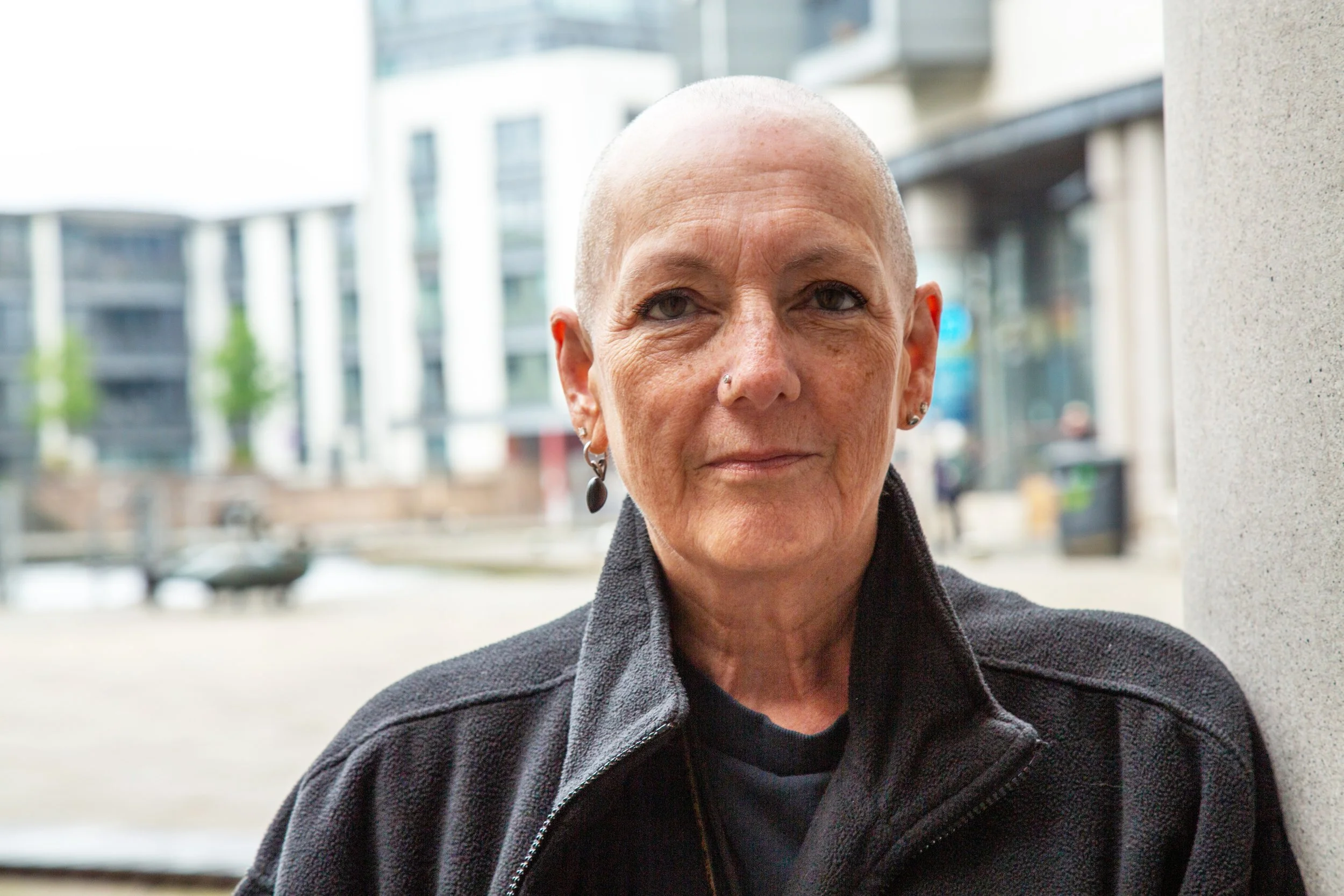
Karen, Lochrin Basin – ‘he was dead, and she’d forgotten’
“My mother's dementia was nine years of hell. If she'd been a dog, she'd have been put down. It's cruel to keep people alive like that. She was nuts, and I had a big, big wobble with that one.
It was Christmas 2014. She called the Police because she couldn't find her husband. He was dead, and she'd forgotten. Yeah, it really destroys. She’d just scream and get violent. It’s not just a little old lady, who’s a bit funny, a bit nuts. Not when she's screaming blue murder and coming at you with a bread knife. She was in a locked room. It was just yuck.”
Do you feel that you got support?
“A lot of support was offered. The fact is that it wasn't really much help. Because she was violent she had to go into a private nursing home as no Council would take her. So that cost an arm and a leg. We had to sell her house, and all the money from that sale went into her care.”
Looking back, what's your happiest memory?
“Oh, being little, about seven or eight, and going to Gullane when my mother learned to drive. It was the first time I remember being at the beach. Before that, me and my sister never got to go anywhere. I mean, I think about it now … yeah, just being in the water.
It was absolutely bloody freezing. But it was just so nice.”
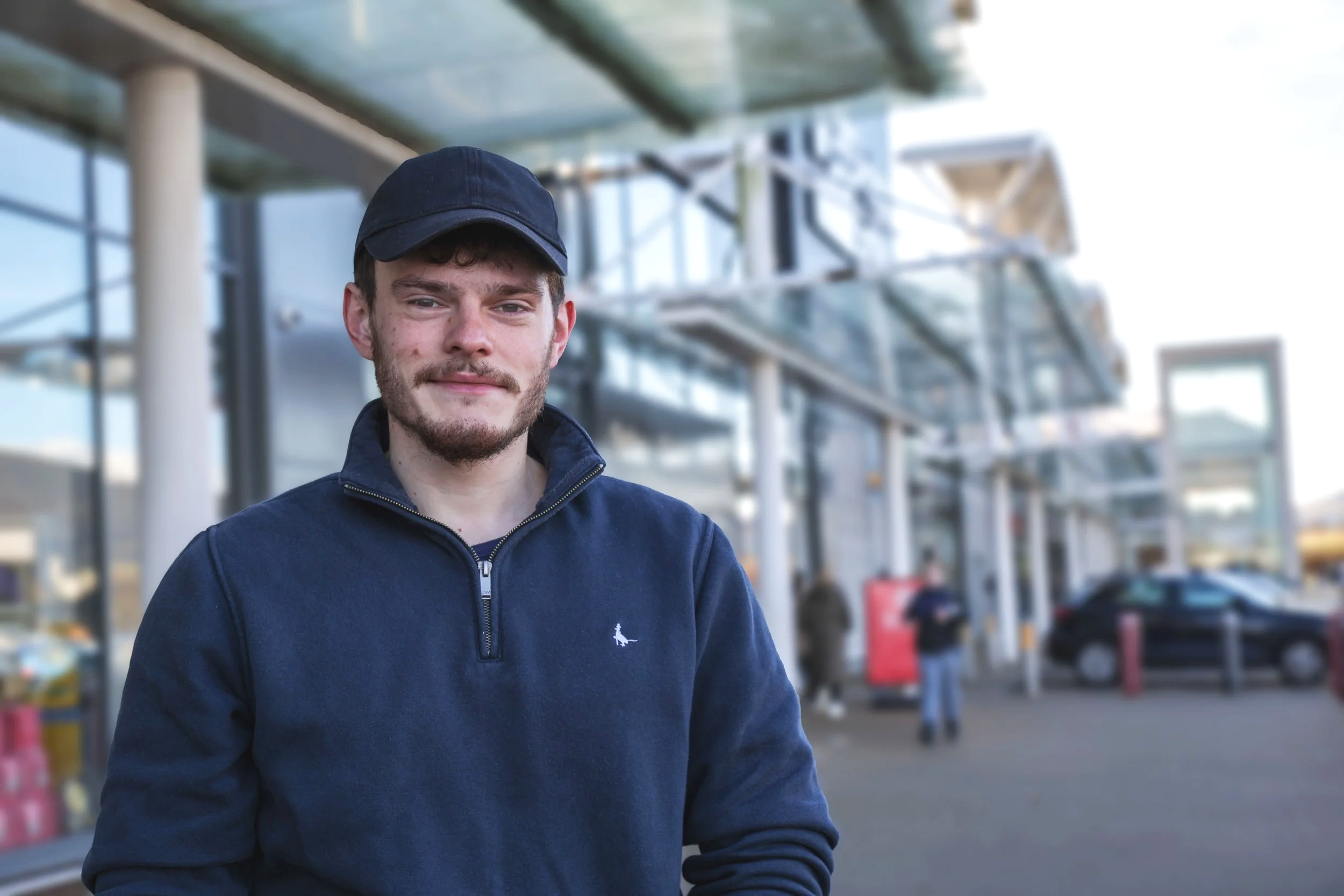
William, Straiton Retail Park – ‘experiences and perspectives’
“Next week I’m off to Slovakia and Prague with my girlfriend. She’s Canadian. Our plan beyond that is to move to Canada - perhaps permanently, perhaps not. I’d hardly travelled before I met her, but she wants to see as much of Europe as possible while she’s allowed to stay here, so we’re doing that together. I’ve learned that travelling is one of the best things to open your mind, to help you see things as other people see them, to understand other peoples’ experiences and perspectives.
Edinburgh is a massively cosmopolitan city now, which is perhaps one of the factors behind a lot of loneliness here. But I think that mix of people is something that you can learnt to really embrace and appreciate as you gain insights into other cultures.
Yeah, it’s an adventure.”
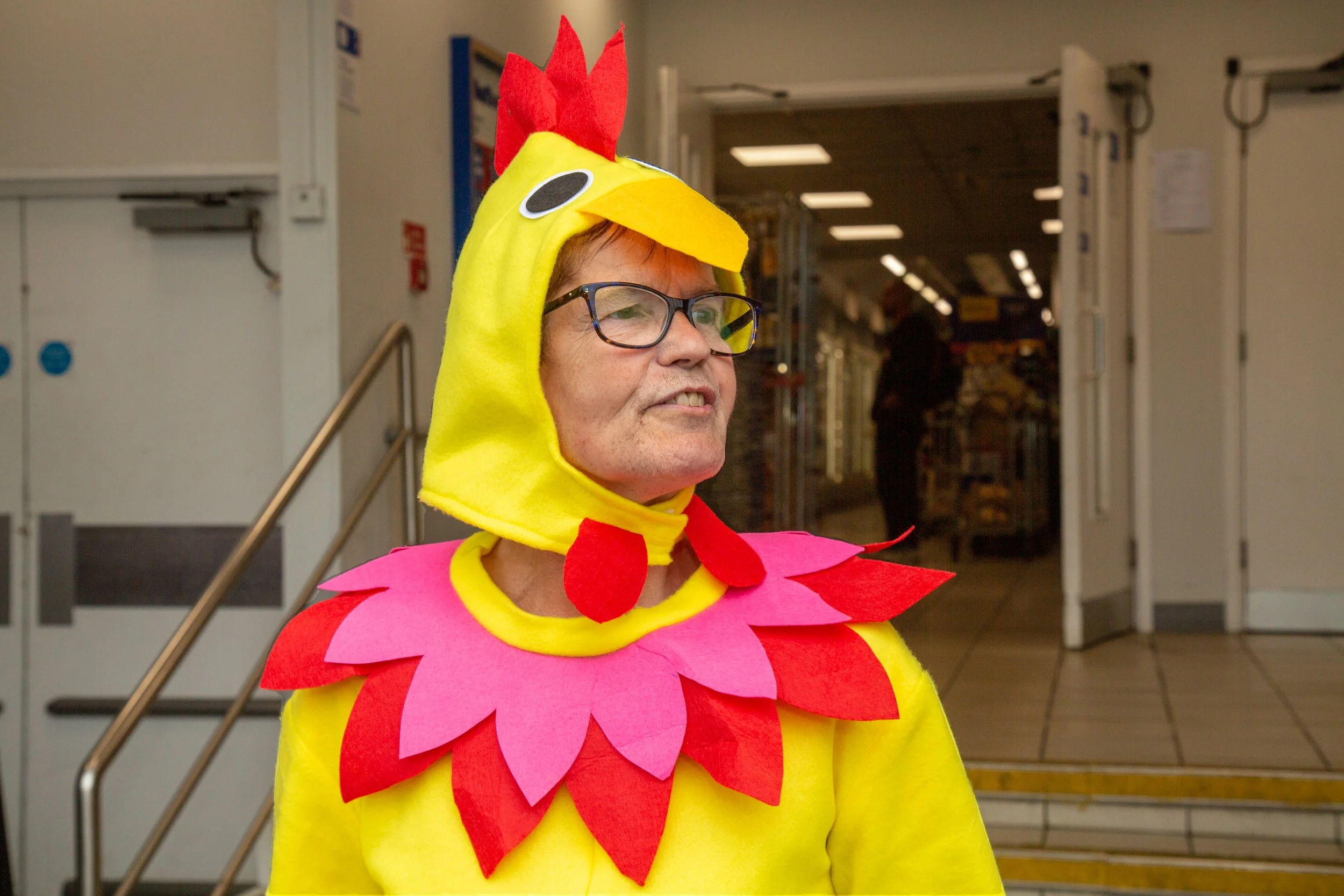
Steph, Tesco, Picardy Place – ‘this chicken is probably the best’
“I’ve been fundraising for Marie Curie for thirty-four years.”
Is there a reason why you focus on Marie Curie?
“My mother died suddenly of leukaemia back in 1975. She was only fifty-six. I was eighteen at the time. Funnily enough, I didn’t think about that as a reason for doing this when I started. I've also helped Alzheimer's Scotland and Cash for Kids.”
Have you any idea how much money you've raised over that time?
“Around £60,000. I would say about 50% of that has been for Marie Curie. Sarah Boyack the MSP tabled a motion about me in the Scottish Parliament. She wanted to tell other MSPs about what I do, mainly what I've done for Marie Curie. And my councillor, Finlay McFarlane, also tabled a motion at a full Council meeting in May because he wanted Edinburgh's Lord Provost to recognise me. Which he did.”
That’s wonderful, and richly deserved. Do you have a favourite outfit?
“The daffodil’s good. So’s the Bavarian beer waitress, the doctor, the clown and the nurse. I’ve got a few I made myself too, but I think this chicken is probably the best.”
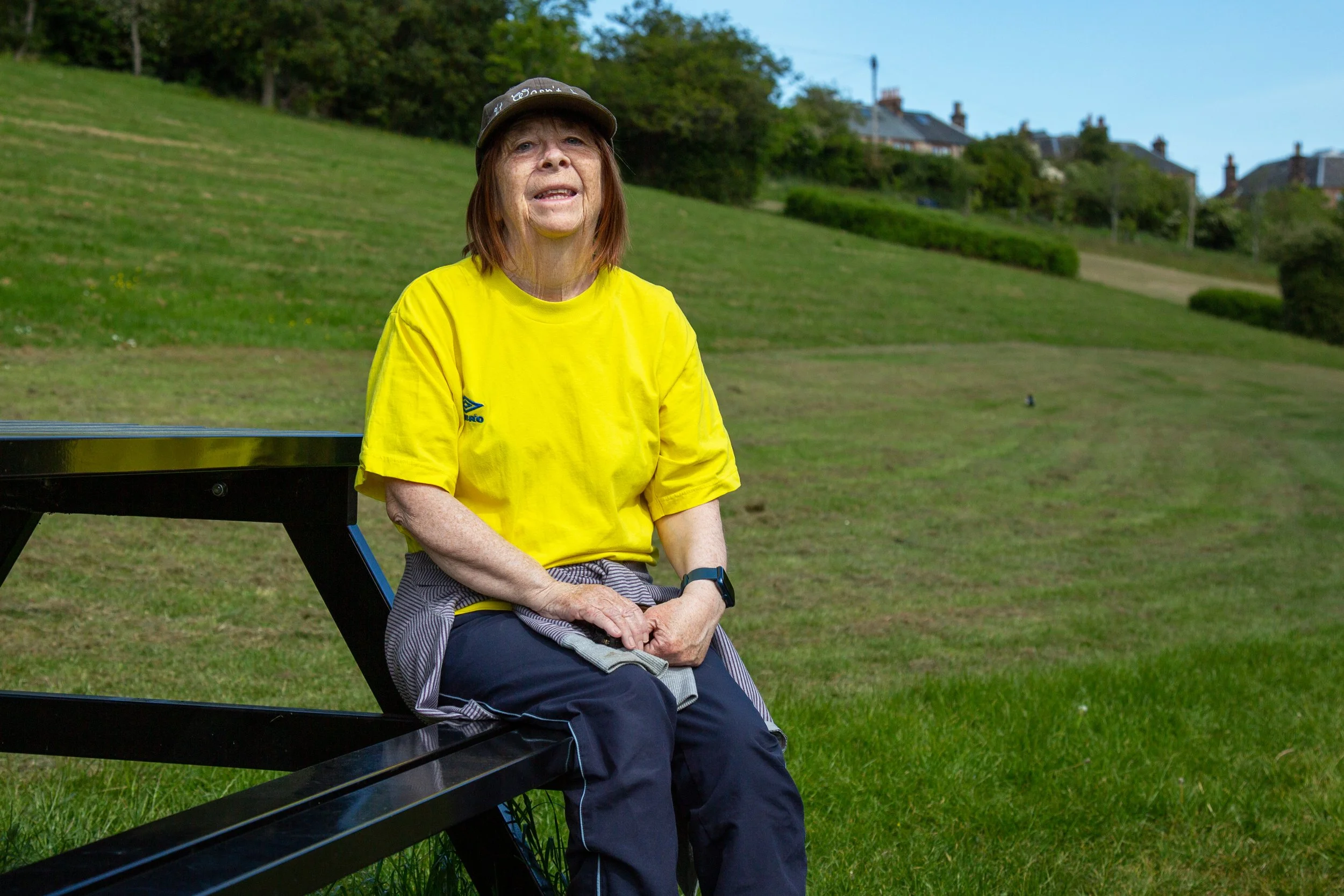
Doreen, Braidburn Valley Park – ‘I got a wee devil instead!’
“The year after COVID was a bad year. I lost my mum, then I lost one of my sisters. They were very close to each other. Yes, it was a horrible year. I also lost my cat, who was 21, that year.
That’s when I started walking in the park here. It was purely out of boredom, to be honest. One day I thought, ‘What will I do today?’ So, I came along here, and that was it. I get out most days; it’s not often that I don’t get out.
And now I've got two cats, Bailey and Charlie.
I’m a retired primary teacher. I miss the kids, but I still meet my colleagues on a Friday when school closes, and we go for a coffee or for lunch. I thought I might go back part-time, but I'm enjoying myself too much. I've just come back from Spain, and I’m saving for a trip to Australia to see cousins and an auntie. I was going to go last year, but my kitchen and my bathroom took over.”
Tell me something unusual about yourself.
“Well, about 10 years ago I got a tattoo. I was going to get the pink Panther, but I got a wee devil instead!”